
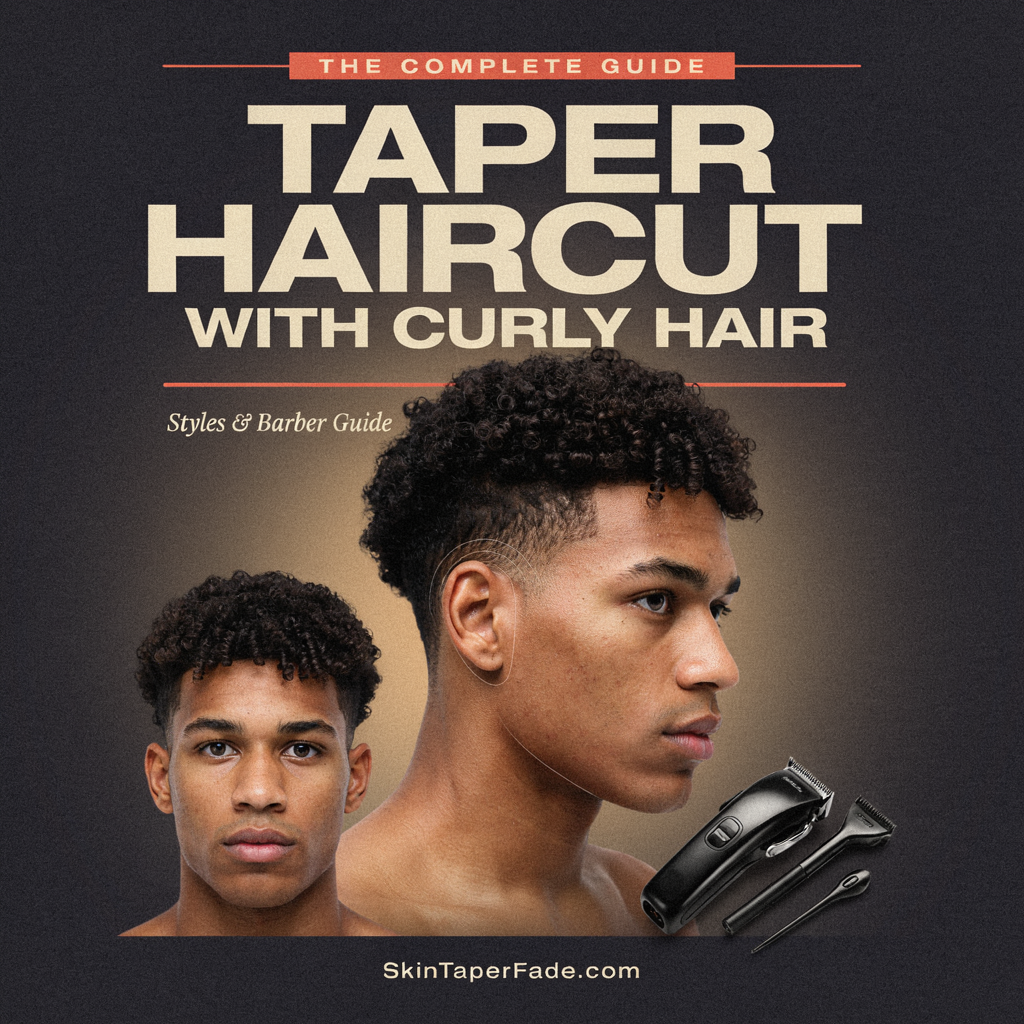
A taper haircut with curly hair keeps the texture you enjoy while giving the edges a more deliberate shape. The top can stay full, the fringe can fall forward, and the temples or neckline can be shortened without removing every curl from the sides.
The important decision is how much of that curly shape to keep. A small low taper and a wide skin blend produce very different silhouettes. Choosing the top shape first, then fitting the taper around it, usually makes the request easier to explain.
This guide covers placement, curl length, styling options and barber instructions. For the wider haircut family, see our complete guide to taper haircuts for men.
Taper Haircut with Curly Hair
What is a curly taper haircut?
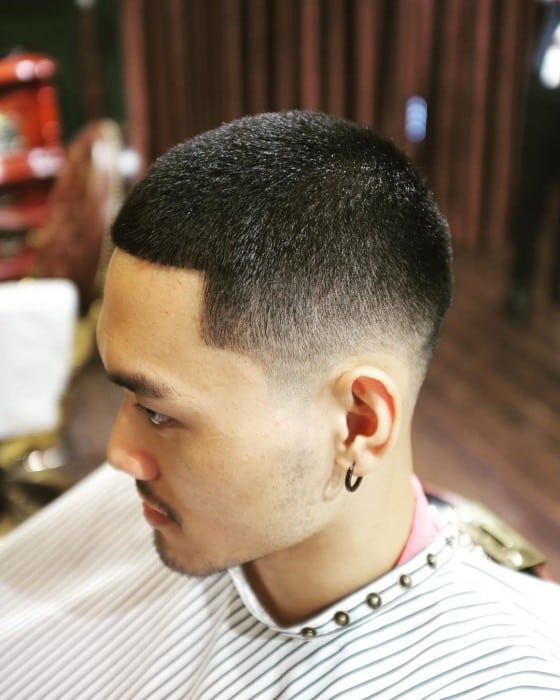
A curly taper haircut gradually shortens the sides or back while leaving curls longer elsewhere. The blend can be soft and spread through the sides, or concentrated at the temples, sideburns and nape. The finished shape might be rounded, compact, higher on top or longer at the front.
A taper does not have to reach bare skin. You can retain visible hair at the shortest point or ask for a skin finish. The taper describes the transition; the curls and their length determine much of the hairstyle above it.
Curly taper vs curly fade
In common usage, a curly taper preserves more fullness through the sides and focuses the shortest work near the edges. A curly fade often removes a broader area of side and back hair. Barbers may use these labels differently, so show a reference that clearly depicts the amount of curl you want left.
If your priority is keeping a rounded curly silhouette, point to the upper sides and say, “Please preserve this volume.” If you want the curls mainly on top with close sides, show that instead.
Low, mid or high taper for curly hair?
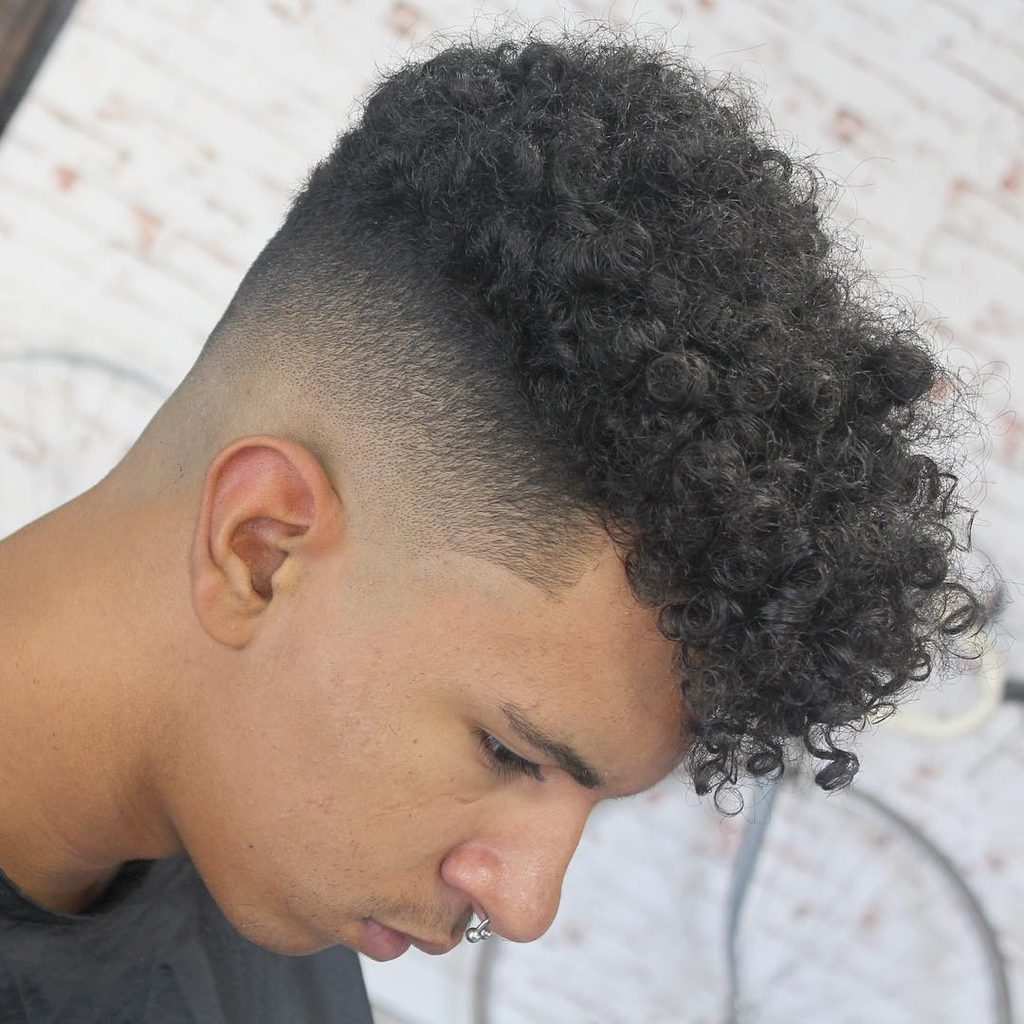
Low taper with curly hair
A low taper stays close to the sideburns and neckline. It is a useful option if you like fullness around the sides and only want the edges tidied. The curls can remain connected to the top without a large closely cropped area beneath them.
Mid taper with curly hair
A mid taper rises farther around the temples and back. It removes more weight near the edges and makes the top more prominent. Ask where the blend will stop so it does not cut into curls you wanted to retain.
High taper with curly hair
A higher taper creates stronger contrast and changes more of the side shape. This may suit a prominent top, but it can remove much of the rounded width. Check whether your reference shows a targeted high taper or a full high fade.
| Your preferred result | Option to discuss |
|---|---|
| Keep a rounded shape and fuller sides | Low, narrow taper |
| Define the edges with more visible contrast | Mid taper |
| Emphasise height on top | Higher taper, with coverage agreed first |
| Keep a soft bottom edge | Non-skin finish |
| Show bare skin at the lowest point | Skin taper |
There is no universal height for each label. Your head shape and natural hairline affect placement.
Skin or non-skin finish?
A skin taper takes the shortest section to bare skin. It gives a clear contrast with the curls and becomes less crisp as hair grows back through that area. You can keep the skin section low and small rather than fading the entire side.
A non-skin taper leaves visible hair at the bottom. It looks softer and may feel more connected to fuller curls. If you are unsure, ask your barber to start with a conservative finish and show you the shape before going closer.
Read our skin taper fade guide for more about the close finish.
Eight taper haircut styles for curly hair
1. Low taper with a rounded curly top
Keep volume through the top and upper sides while cleaning the sideburns and nape. The outline matters more than making every section equally short. Ask your barber to assess how the curls sit naturally before choosing the blend height.
2. Taper with a curly fringe
Leave extra length at the front so curls can fall towards the forehead. The taper tidies the surrounding edges without taking away that forward movement. Specify whether the fringe should sit above the eyebrows or longer when dry.
3. Short curly taper haircut
Keep the top compact while retaining enough length to show the curl pattern. It can be simpler to manage than a long top, but cutting too short may change how the curls form. Show the barber the dry texture you want rather than relying only on a centimetre measurement.
4. Mid taper with longer curls on top
The shorter temple area makes the longer curls stand out. Ask for a planned connection through the upper sides if you want a continuous shape. A deliberately disconnected version is a different choice and should be clear in your reference.
5. Temple taper with curly hair
A small temple blend can sharpen the front side edges while preserving curls around the ears and back. A temple taper haircut is useful when you want a targeted change. Decide separately whether the nape should be tapered too.
6. Neck taper with a curly back
Keep the curly shape above and gradually shorten only the lowest nape area. This can tidy the back without removing its main fullness. Ask for the neck taper to stay low if you want the back to remain rounded.
7. Curly taper with a beard
The sideburn can connect into the beard. Discuss whether you want that connection faded, or the beard left full with only its outline tidied. The amount of curl above and beard volume below should be considered together.
8. Taper with longer loose curls
Keep more length through the top and upper sides for movement. A low taper can tidy the perimeter while preserving the longer style. Tell your barber how you wear it most days, including whether you push it back, part it or tie it up.
Curl pattern, density and shrinkage
Two heads with similar-looking curls may need different cuts. Consider the pattern, how much hair is present and how it changes from damp to dry.
Looser curls: They may need more length to form a visible bend or curl. A very short top can sit differently from the longer reference you brought.
Tighter curls and coils: Shrinkage can make the finished dry shape considerably shorter than stretched or wet hair suggests. Explain the length and silhouette you want when dry.
Dense curls: A taper cleans the edges but does not automatically remove bulk above them. Ask your barber where weight should be reduced while preserving curl definition.
Finer curls: Keeping some upper-side fullness may give the balance you prefer. Ask before taking a wide section down to skin.
There is no single minimum top length that works for every curly taper. Bring a photo with a similar pattern and density, then let the barber adapt it to your hair.
Should curly hair be cut wet or dry?
Professionals use different approaches. Damp cutting can help establish length and shape; dry assessment shows how the curls actually sit. The useful question is whether your barber will account for the finished dry result and shrinkage.
Arrive with your curls in a reasonably natural state and explain your usual products and routine. If the barber has specific preparation instructions, follow those. Before leaving, ask to see the shape with the curls arranged as you intend to wear them.
What to ask your barber for
Use a reference with front, side and back views. You can say:
“I’d like a taper haircut that keeps my curls full on top and around the upper sides. Keep the taper [low / mid], with the shortest part [still dark / down to skin]. Leave enough front length for a curly fringe, and please judge the finished length when my curls are dry. Keep my hairline [natural / neatly outlined].”
Adjust the fringe instruction if you wear the front upwards or back. Confirm:
- Top shape: Rounded, compact, forward-falling or higher through the centre?
- Side volume: How much curl should stay above and behind the ears?
- Taper coverage: Just the temples and nape, or more of the sides?
- Shortest finish: Skin or visible hair?
- Dry length: Where should the fringe and back sit after shrinkage?
A line-up is optional. If you want one, ask the barber to respect the natural hairline rather than moving the corners back for a sharper outline.
A simple styling routine
Start with a routine that suits how your hair behaves rather than buying products for every possible problem.
- Clean and condition as needed. Choose a washing schedule based on your scalp, activity and product build-up, rather than a fixed rule for all curls.
- Apply a small amount of suitable styling product. A lighter product may suit finer hair; denser curls may prefer a different texture. Follow the product directions and add more only if needed.
- Shape while damp. Use your fingers or an appropriate tool to arrange the curls in their natural direction. Detangle gently instead of pulling through knots.
- Let the hair dry with limited disturbance. Air-dry or use a diffuser on a comfortable setting. Repeatedly touching the curls while they settle can change their shape.
- Adjust once dry. Check the fringe and overall outline before adding more product.
The taper itself needs little styling. The top determines most of the daily effort, so tell your barber if you want a quick routine.
Refreshing the curls between washes
If the curls flatten overnight, lightly dampening and reshaping them may help. Add only the product needed for your hair rather than layering a full application every day. When build-up affects the feel or appearance, adjust the wash routine.
Maintaining a curly taper
The top and tapered edges may need attention at different times. A skin-short outline shows regrowth sooner, while longer curls may retain their main shape. After a couple of weeks, check whether you need an edge tidy-up or whether the entire cut has become too heavy.
Ask your barber whether they can refresh the temples and nape while leaving the top to grow. Avoid taking the taper higher yourself to chase a neat outline; that can remove the side volume you were trying to preserve.
Common mistakes to avoid
Choosing the taper height before the top shape. Agree on the overall silhouette first, then decide where the short blend belongs.
Using a reference with a different curl pattern. A photo can explain the idea, but the result should be adapted to your hair.
Ignoring shrinkage. Discuss the finished dry length, especially at the fringe.
Removing too much upper-side weight. That can change a rounded cut into a much narrower shape.
Assuming a taper controls all bulk. The longer sections may need shaping separately.
Expecting the cut to create curls. A taper frames existing texture; it does not change naturally straight hair into curly hair.
Frequently asked questions
Is a taper haircut suitable for curly hair?
Yes. It can tidy the perimeter while retaining natural texture above. The placement should support the curl shape and amount of volume you want.
Is a low or mid taper better for curly hair?
A low taper generally preserves more side fullness. A mid taper shows more of the blend and can make the top more prominent. Choose according to your preferred silhouette rather than a rule about curls.
Can I have a curly taper without showing skin?
Yes. Ask for visible hair at the shortest point. A skin finish is optional and should be specified separately.
How much length should I leave on top?
Enough for your curl pattern and intended style to form. The right length varies, so describe how you want it to look when dry and bring a suitable reference.
Can I keep a curly fringe with a taper?
Yes. The front length can stay longer while the temples and neckline are tapered. Account for shrinkage when deciding where the fringe should sit.
Can I grow out the top while keeping a taper?
Yes. Ask for edge maintenance without shortening the top unnecessarily. You may still need occasional shaping to keep the longer curls balanced.
Does a curly taper need daily styling?
The edges usually need little work, but the top may need refreshing depending on its length and how your curls settle. Choose a shape that suits the routine you are willing to follow.
Choosing your curly taper
A good taper haircut with curly hair preserves the shape you like and makes the edges feel intentional. Decide how much curl to retain, how high the blend should rise and whether you want a skin finish. Explain the dry result to your barber and choose styling that works with your natural pattern.
Explore more placements in our taper haircuts for men guide.