
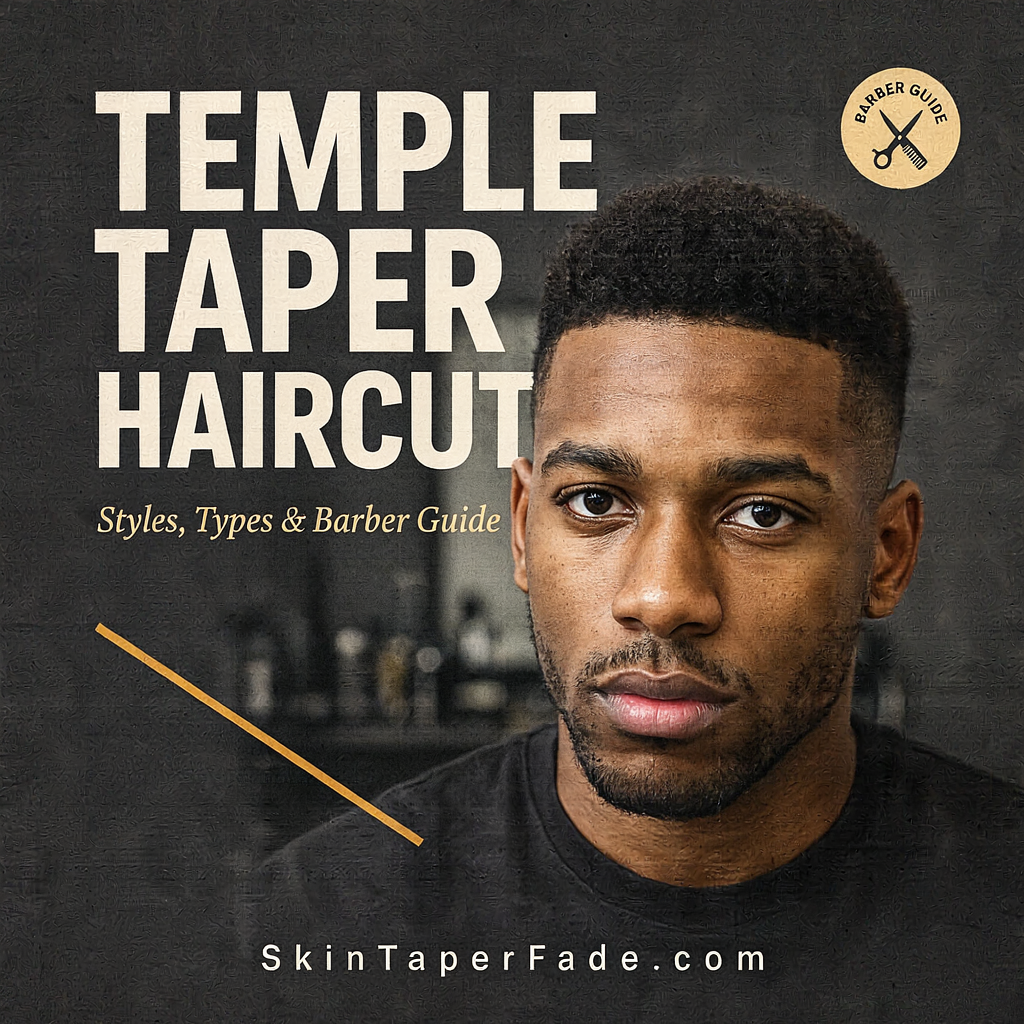
You do not need to cut all your sides short to give a hairstyle a cleaner outline. A temple taper haircut concentrates the blend near the temples and sideburns, leaving you room to keep curls, waves or longer hair elsewhere.
That targeted change can make a noticeable difference from the front. It can sharpen the edge of an Afro, neaten a side part or connect a haircut to a beard. The key is deciding how much of the temple area you want shortened before your barber starts.
This guide explains the finish, the styles you can pair it with and the details to discuss in the chair. For a broader overview, see our complete guide to taper haircuts for men.
Temple Taper Haircut
What is a temple taper haircut?
A temple taper haircut gradually shortens the hair around the temples and sideburns. The transition connects a shorter lower section to longer hair above, rather than leaving an abrupt change in length.
The temples sit at the sides of the forehead, near the front of the hairline above the sideburns. A temple taper usually affects that local area. It does not, by itself, tell the barber to fade the whole side, taper the neckline or shorten the top.
Some versions stay soft and dark at the bottom. Others reach bare skin. The tapered area can also be narrow and low or wider and more visible. Those choices explain why photographs with the same label can look different.
Temple taper vs temple fade
The terms overlap. A temple taper often suggests a restrained blend that preserves more surrounding hair. A temple fade, sometimes called a temp fade, often suggests a closer, more noticeable transition in the same area. However, barbers may use the names interchangeably.
If you want a subtle result, ask for visible hair at the shortest point and show how much fullness you want retained. If you want skin showing, say that explicitly. A photo gives those descriptions a clear reference.
Temple taper vs full taper fade
A temple taper focuses on the front side edges. A broader taper haircut may also include a blend at the nape and around the ears. A full fade commonly shortens more of the sides and back in a continuous transition.
| Cut or detail | Main area affected | What to specify |
|---|---|---|
| Temple taper | Temples and sideburns | Height, width and shortest length |
| Neck taper | Nape | How the back should finish |
| Taper fade | Often temples and nape, with other areas adapted | Exactly which edges should be tapered |
| Full fade | More of the sides and back | Height and whether the bottom reaches skin |
You can combine a temple taper with a neck taper haircut. Tell your barber that you want both; do not assume a request for one includes the other.
Temple taper options
Soft temple taper
The shortest section still has visible hair, creating a gentle change in length. This works well when you want the sideburns neater without a bare patch near the temple. It can suit a classic scissor cut or a hairstyle with fuller sides.
Ask for: “A subtle temple taper with some hair left at the bottom. Keep the surrounding sides full.”
Skin temple taper
The bottom of the blend reaches bare skin. The contrast makes the temple area more defined, even if the tapered section is small. Agree on how much skin should show and how high it should rise.
For more on this finish, read our skin taper fade guide.
Low temple taper
The short blend stays close to the sideburn and lower temple. This preserves more weight above it and can be a useful first step if you are trying a taper for the first time.
Higher temple taper
The blend extends farther up the temple area. It creates a stronger outline, but taking it too high or wide can remove the side volume you intended to keep. Ask the barber to point out the proposed coverage before cutting.
Temple taper with a line-up
A line-up defines the edge of the forehead and temples. It is a separate choice from blending the hair shorter. You can have a temple taper with a natural front hairline, or combine it with a sharper outline. If you want a line-up, ask the barber to follow your natural hairline rather than pushing it back to make a straighter corner.
Temple taper haircut styles
1. Temple taper with an Afro
A small temple taper can give a shaped Afro a cleaner frame while preserving its width and height. Decide on the main silhouette first. Then explain how much of the front side edge should be shortened and whether you want a natural or outlined hairline.
2. Temple taper with a curly top
The contrast between the shorter temple area and fuller curls can make the top stand out. Keep enough curl at the upper sides if you want a rounded shape. Ask your barber to account for how your curls sit when dry.
3. Temple taper with a curly fringe
Let the front fall forward while the temples stay tidy. Avoid removing too much near the corners if you want curls to frame the forehead. A reference with a similar curl pattern helps explain the shape.
4. Temple taper with waves
A targeted taper can define the front edges without necessarily removing the wave pattern across the whole side. Tell your barber where you want the waves preserved and discuss the coverage before selecting a skin finish.
5. Temple taper with a textured crop
The crop supplies the shape on top while the taper cleans the sideburn area. A low, soft blend gives a restrained look; a skin finish adds more contrast. Choose a fringe length that works with your everyday styling routine.
6. Temple taper with a side part
Keep the upper sides long enough to comb into position. A small taper can neaten the edge without turning the style into a broad fade. Mention which side you normally part and whether you prefer a natural part or a deliberately shaved line.
7. Temple taper with longer hair
Longer hair can stay loose, swept back or parted above a small temple blend. Show how you wear it most days. If you tie it back, ask how the taper will look with the temples exposed and whether any shorter sections will fall out.
8. Temple taper with a beard
The sideburn can transition into beard hair for a connected finish. Tell the barber whether you want the beard faded near that connection or left fuller. Beard density and growth direction influence how the blend looks.
Choosing a temple taper for your hair type
Straight hair: Changes in length can show clearly, so a smooth connection matters. Ask the barber to retain enough weight above the blend if your sides tend to stick out.
Wavy hair: Leave enough length for movement to form. The taper can tidy the lower edges while the upper sides stay loose.
Curly hair: Decide how much volume to preserve around the temples. A narrower blend leaves more curl shape intact than a wider one.
Coily and Afro textured hair: Discuss the overall shape, the temple blend and the line-up separately. A crisp outline does not have to mean taking the surrounding hair short.
Fine hair: A soft taper may feel more balanced if a skin-short area creates more contrast than you want. Your barber can assess the shape using your actual density.
What if the temple corners are thinning?
A taper does not restore hair at a receding corner. A very sharp outline or close skin finish may make the difference in density more visible. Ask your barber to work with the natural hairline and explain whether your priority is a softer frame or a defined edge.
What to ask your barber for
Take a photo showing the front and side. Then explain the finish in plain language:
“I’d like a temple taper around my sideburns, keeping the rest of the sides fuller. Keep the blend [low and narrow / a little higher], with the shortest point [still visible / down to skin]. Please leave my front hairline [natural / neatly lined up]. I’d like the neckline [left as it is / tapered separately].”
Confirm these details before the cut:
- Coverage: How far will the short area spread up and back from the sideburn?
- Shortest length: Will the bottom show skin or retain hair?
- Surrounding shape: Which curls, waves or longer sections should stay intact?
- Hairline: Is a line-up wanted, and where should it follow the natural edge?
- Beard and nape: Should either receive additional blending?
A guard number can help reproduce a previous haircut, but it does not describe all of these choices. The barber may use several settings and tools to create the finished transition.
Styling and maintenance
Daily styling mainly depends on the top and upper sides. You may use a small amount of matte product for a crop, a suitable curl routine for a textured top or a comb and light hold for a side part. The tapered section itself usually needs little arrangement.
The closest areas will become less defined as they grow. A skin temple taper shows that change sooner than a soft, dark finish. Check the outline after a couple of weeks, then decide whether you need an edge refresh or a full haircut. A sharp line-up may need tidying before the top needs shortening.
Ask your barber about a temple tidy-up between appointments if you want to preserve top length. Be cautious with home clippers: repeatedly moving the outline backwards or widening the short section can change the shape of your hairline.
Common mistakes to avoid
Showing a full fade when you want a small temple taper. Choose a reference that shows the side volume you want retained.
Treating a line-up as part of every taper. Decide on the forehead outline separately.
Forgetting the neckline. A temple-only request leaves the back finish unresolved unless you discuss it.
Making the blend wider than needed. A small difference in coverage can remove curls or waves you wanted to keep.
Trying to make naturally different temple corners identical. The barber can balance the appearance while respecting the actual hairline rather than cutting both sides farther back.
Frequently asked questions
Is a temple taper the same as a temp fade?
They describe closely related work around the temples and sideburns. A temp fade may suggest a closer blend, but terminology varies. Show the height, width and bottom length you want.
Can I get a temple taper without a neck taper?
Yes. Ask for the temples only and explain how you want the neckline finished. The two areas can be treated separately.
Does a temple taper have to show skin?
No. A soft temple taper retains visible hair at the shortest point. Ask for a skin finish if you specifically want bare skin.
Can a temple taper work with long hair?
Yes. A small blend can clean the edges while the top and upper sides remain long. Discuss how it should look when your hair is loose and tied back.
Do I need a line-up?
No. You can keep a natural forehead hairline and still taper the sideburns. A line-up creates a more deliberate outline and should be requested separately.
Can a temple taper blend into a beard?
Yes. The sideburn area can connect gradually into the beard. Tell your barber how much beard fullness you want retained.
How often should I refresh it?
The right schedule depends on your growth rate and preferred definition. A skin finish or sharp line-up becomes less crisp sooner than a soft taper. Use the first grow-out to judge your next visit.
Getting the temple detail right
A temple taper haircut can give your style a cleaner frame while preserving the texture and length you enjoy. Decide how far the short blend should spread, whether it should reach skin and how you want the front hairline finished. Those details help your barber make a small change that fits the whole haircut.
Explore more placements and finishes in our taper haircuts for men guide.