
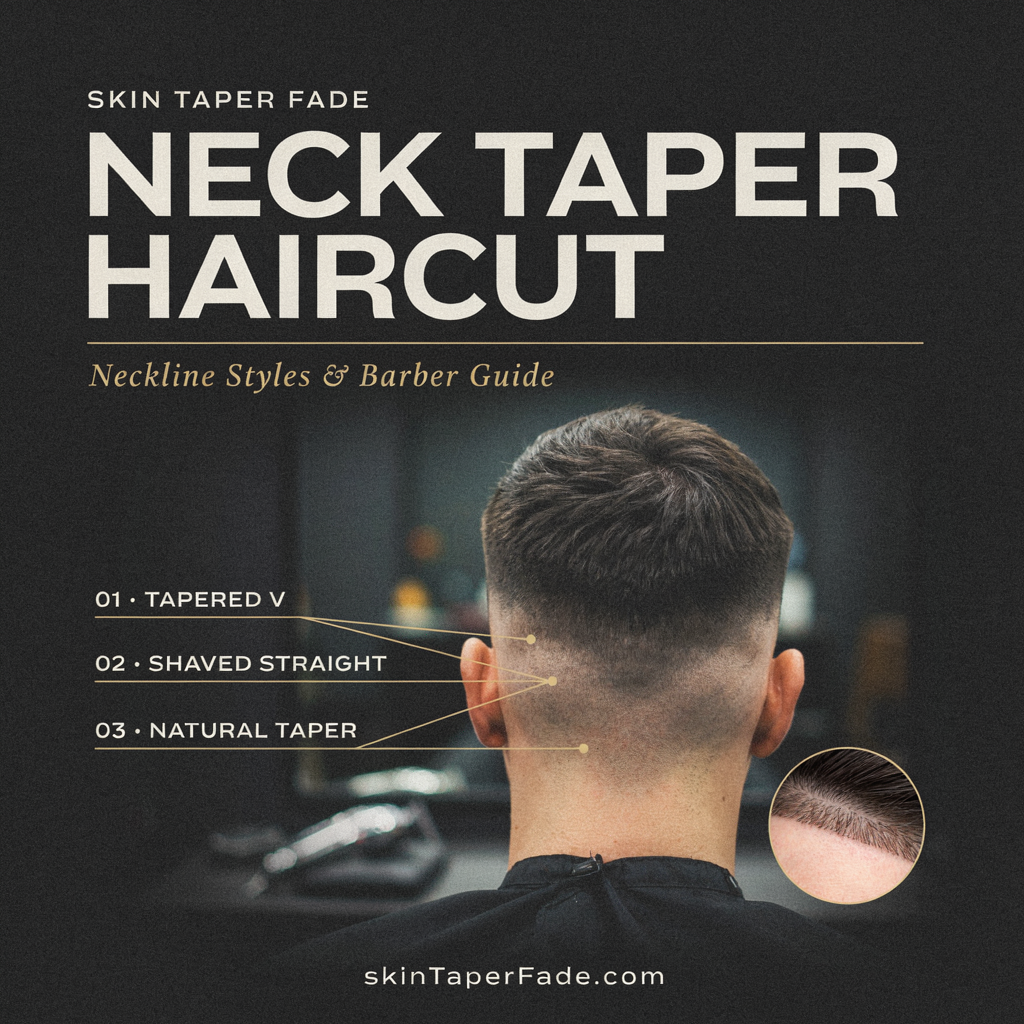
The back of your haircut deserves the same attention as the front. A neat top can still look unfinished if the neckline feels too heavy, too high or disconnected from the rest of the cut. A neck taper haircut addresses that final detail by gradually shortening the hair towards the nape.
You can keep the transition soft, make it more visible or take the lowest part down to skin. It does not automatically mean shaving the sides or changing the style on top. For many men, it is simply a way to give an existing haircut a cleaner finish.
This guide explains the options, how a taper differs from a blocked or rounded neckline, and what to ask your barber. For the broader haircut family, see our complete guide to taper haircuts for men.
Neck Taper Haircut
What is a neck taper haircut?
A neck taper haircut gradually reduces the length of the hair at the back of the neck. Instead of ending the haircut at a solid horizontal line, the barber blends longer hair above into shorter hair near the bottom.
It is also called a nape taper or tapered neckline. The finish can retain visible hair or reach bare skin. Its height can be adjusted to preserve most of the back length or create a more pronounced transition.
A neck taper describes one part of the haircut. You can combine it with a crew cut, side part, curly top, Afro or longer hairstyle. The sides can be tapered too, but they do not have to be.
Is a neck taper the same as a neck fade?
The terms overlap. A neck taper often suggests a softer transition or one concentrated close to the natural neckline. A neck fade may suggest a closer or more obvious blend, sometimes down to skin. Different barbers use these names differently, so specify the height and shortest length rather than relying on the label.
Tapered vs blocked vs rounded neckline
When a barber asks how you want the back finished, these are three common options. They describe different approaches to the edge, although a haircut can combine elements of more than one.
| Neckline | How it is finished | How it changes as it grows |
|---|---|---|
| Tapered | Hair gradually gets shorter towards the nape | The transition softens without relying on a single hard bottom line |
| Blocked or squared | A defined line is cut across the bottom, with more angular corners | New hair below the line can make the outline less distinct |
| Rounded | The bottom edge is outlined with curved corners | The rounded outline becomes less clear as hair grows underneath |
Tapered neckline
Choose a tapered neckline if you like a gradual finish. It can follow the direction of your natural hair growth and work with a variety of top lengths. A subtle non-skin taper usually looks less sharply outlined than a blocked edge.
Blocked neckline
A blocked neckline gives the back a deliberate, defined shape. It can look crisp immediately after cutting, but the new growth beneath it becomes noticeable if you prefer a consistently clean line. Ask the barber to keep the placement realistic rather than moving it unnecessarily high.
Rounded neckline
A rounded neckline softens the corners of an outlined back. It still has a defined bottom edge, so it is different from gradually tapering the hair away. If you like a visible outline but prefer less angular corners, this may be the finish you want.
There is no rule that one neckline suits every person. Your natural hairline, density at the nape and preferred amount of upkeep are useful starting points.
Main neck taper options
Low neck taper
A low neck taper stays near the bottom of the hairline. The barber shortens the lowest area while keeping most of the back full. It is useful if you like the existing shape and mainly want to tidy the nape.
Ask for: “A low taper at the neckline, keeping the back fuller above it.”
More pronounced neck taper
The blend extends farther up the nape and is easier to see from behind. It can complement a shorter haircut, but removing too much back length may change the silhouette of a fuller style.
Ask for: “A more visible neck taper, but please show me how high it will reach before you cut.”
Skin neck taper
The lowest section is taken to bare skin and blended into the hair above. You can keep the skin area small and low or make it wider. Agree on that coverage before cutting.
For more about the skin finish, read our skin taper fade guide.
Soft non-skin neck taper
Visible hair remains at the shortest point. This gives you a tidy transition without exposing a bare section. It is a useful option if you want a restrained finish or prefer not to have the nape cut extremely close.
Neck taper styles for different haircuts
Neck taper with a classic side part
A gradual nape finish works well with a combed top and some length through the sides. Keep the blend soft if you want the haircut to look cohesive rather than strongly contrasted at the back.
Neck taper with a crew cut
The short top and sides can connect into a compact taper at the nape. Specify whether you want a dark bottom edge or a skin finish; the same crew cut can look noticeably different with either.
Neck taper with curly hair
A small taper can tidy the lowest curls while retaining fullness above. If you want the back to stay rounded, tell your barber before they remove weight. The shape should be assessed with the curls sitting naturally.
Neck taper with Afro textured hair
A taper at the nape can define the base of a shaped Afro while leaving its main volume intact. Decide how much width and length should remain at the lower back, particularly if your reference shows a close, narrow finish.
Neck taper with longer hair
Longer hair can conceal or reveal the taper depending on how you wear it. Ask where the shorter section will stop and how it will connect to the longer layers. If preserving length for tying the hair back matters, mention that before cutting.
Neck taper with a mullet
A small taper can clean the lowest edges while keeping length through the back. However, taking the taper too high can remove part of the mullet’s defining shape. Use a rear-view photo that shows exactly how much back length you want retained.
Choosing the finish for your natural neckline
Hair at the nape may grow unevenly, form points or change direction. A good neckline finish accounts for those features rather than forcing every head into the same outline.
If your nape is sparse, a subtle taper may connect more naturally than a strongly defined line. If the hair is dense, the barber may need to remove some weight above the bottom edge as well as tapering the lowest section. If you have a low natural hairline, cutting an outline much higher can leave a larger area of visible regrowth beneath it.
Ask your barber to show the finished back with a mirror. Check it with your head in a normal position, because bending your neck changes how the area appears.
What to ask your barber for
You can use this wording:
“I’d like a tapered neckline rather than a solid blocked line. Keep the taper low and leave the back fuller above it. I want the shortest part to [retain some visible hair / go down to skin]. Please follow my natural neckline and show me the back before we finish.”
Then confirm three details:
- Height: How far up the nape will the shorter blend reach?
- Closeness: Will the lowest point retain hair or show skin?
- Connection: How much length and weight will stay above the taper?
If you want the temples tapered too, say so separately. Asking only for a neck taper should not leave the side finish open to guesswork.
Guard numbers can help repeat an earlier cut, but they do not describe the entire blend. A clear rear-view reference and these details give your barber a better picture of the result you want.
How often should you tidy a neck taper?
That depends on your hair growth and how defined you want the finish. A soft taper becomes fuller gradually. A skin-short section changes more visibly as stubble returns. A sharp outlined neckline shows new growth below its edge.
Check the back after a couple of weeks and use that to decide your next appointment. You may only need a nape tidy-up if the top and sides still have the shape you like. Ask your barber whether they offer a neckline refresh between full cuts.
A neck taper can be easy to style because there is little hair to arrange at the bottom, but that does not make its outline permanent.
Should you trim a neck taper at home?
A loose-hair clean-up and recreating a blended taper are different tasks. The back is difficult to see clearly, and it is easy to raise the neckline or create an unwanted line. If you are unsure, leave the blend to your barber.
If you do tidy stray hair beneath the finished cut, use suitable equipment, follow its instructions and avoid moving into the blend itself. Do not keep shaving higher in an attempt to make both sides match. That can change the placement of the haircut.
Common neck taper mistakes
Taking the neckline too high. A higher finish removes more back length and may create an obvious regrowth area beneath it.
Assuming every taper goes to skin. Decide the shortest length separately from the height.
Choosing an outline without considering hair growth. A straight or rounded edge may need adapting to the natural nape pattern.
Ignoring the overall back shape. Curls, an Afro, longer layers and a mullet need enough weight preserved above the taper.
Showing only a front-view photo. A neckline request needs a clear back view.
Frequently asked questions
Is a neck taper a complete haircut?
It describes the finish at the nape rather than the whole hairstyle. You can add it to many cuts and choose the top and sides separately.
Does a neck taper have to be shaved to skin?
No. A soft neck taper leaves visible hair at the bottom. Ask for a skin neck taper if you want the lowest section taken to bare skin.
Is a tapered neckline better than a squared neckline?
It depends on your preference. A taper gives a gradual transition; a squared neckline creates a defined outline. Consider your natural nape hairline and how much upkeep you want.
Can I get a neck taper without fading the sides?
Yes. Tell the barber that you want only the nape tapered and explain how you want the sides finished.
Can a neck taper work with long hair?
Yes, provided its height and connection are planned around the longer style. Mention any length you need to keep for tying the hair back.
What is the difference between a neck taper and a beard neckline?
A neck taper shapes the hair at the back of the head. A beard neckline shapes facial hair beneath the jaw and around the front of the neck. They are separate grooming decisions.
Getting the back right
A neck taper haircut is a small detail that can make the whole cut feel more deliberate. Decide how high the blend should rise, whether the bottom should show skin and how much fullness you want above it. Bring a back-view photo and check the finished nape before leaving the chair.
Explore more ways to shape the sides and back in our taper haircuts guide.