
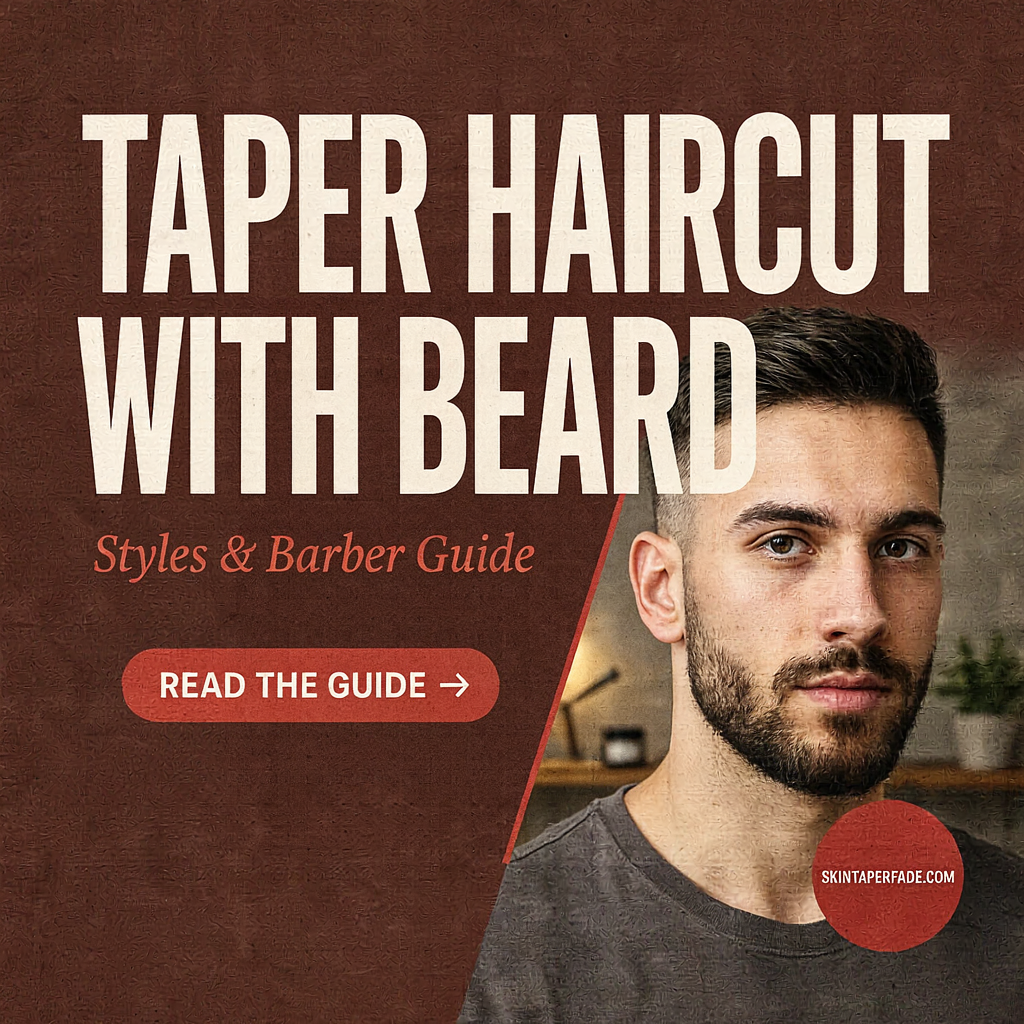
A taper haircut with beard can connect the hair on your head to your facial hair through a gradual sideburn transition. It can also create deliberate contrast between a close temple area and a fuller beard. Both approaches work; the important detail is agreeing on which one you want.
The haircut and beard do not need matching lengths. A short crop can sit above a substantial beard, while a longer top can work with stubble. Plan their shapes together so the result looks intentional from the front and side.
This guide covers taper placements, beard combinations, sideburn blending and maintenance. For the whole haircut family, explore our taper haircuts for men guide.
Taper Haircut with Beard
What is a taper haircut with beard?
A taper gradually shortens the hair towards the lower sides and back. When paired with a beard, the barber can blend the sideburn area into the facial hair, leave it fuller or separate the two with a close-cut section.
The key decisions are:
- Haircut placement: How high and wide should the temple and nape tapers be?
- Sideburn connection: Should it blend into the beard or create a visible separation?
- Beard shape: How much length, cheek fullness and chin volume should remain?
- Outlines: Should the cheek and beard neckline stay natural or be sharply defined?
A request for a taper haircut does not automatically authorise shortening the whole beard. Explain the beard work separately before the clippers start.
Taper haircut vs beard fade
A taper haircut describes the hair on the head. A beard fade describes a gradual change in facial-hair length, often near the sideburns and upper cheeks. They can be combined, but they are separate parts of the service.
| Detail | What changes |
|---|---|
| Hair taper | Length around the sides, temples or nape |
| Sideburn blend | Connection between head hair and beard |
| Beard fade | Graduated facial-hair lengths |
| Beard shaping | Overall outline, cheek fullness and chin length |
| Beard line-up | Defined cheek and neckline edges |
If you want only the connection tidied, say, “Blend the sideburn into my beard, but keep the main beard length.” If you want more of the cheeks faded, show the exact coverage.
Low, mid or high taper with a beard?
Low taper with a beard
A low taper stays near the sideburns and neckline, preserving more side hair. A soft connection can work with a short beard or fuller facial hair without creating a large bare section. This is a useful starting point if you want an understated shape.
Mid taper with a beard
A mid taper rises farther around the temples and nape. It creates more visible contrast and can frame a textured top or curly style. Ask how the sideburn area will connect to the beard so the blend does not extend farther down the cheeks than intended.
High taper with a beard
A higher taper makes the top and beard more prominent by shortening more of the temple area. Check whether the reference shows a targeted high taper or a full high fade. Agree on the coverage at both the head and beard before cutting.
Skin taper with a beard
A skin taper takes the shortest head-hair section to bare skin. The beard can then gradually increase in length beneath it or remain more visibly separate. A skin finish does not mean the upper beard must also be shaved close.
Compare close haircut finishes in our skin taper fade guide.
Blended sideburns or a fuller connection?
A blended sideburn moves gradually between lengths. Depending on the haircut, the transition may become shorter near the temple and longer again into the beard. It can help the two shapes appear connected without requiring one uniform length.
A fuller sideburn connection keeps more hair between the head and beard. This may suit a classic taper or someone who wants less contrast. A deliberately separated beard can also work, but the gap should be planned rather than created accidentally during a skin taper.
Beard density matters. A broad fade through sparse cheeks can expose more skin than the reference suggests. Ask the barber to adapt the transition to the beard you have.
Eight taper haircut and beard combinations
1. Classic taper with a short beard
Keep the upper sides connected to a neat top and retain a compact beard. A soft sideburn blend can make the transition restrained. Discuss the cheek and neckline finish rather than automatically asking for a very sharp outline.
2. Low taper with a full beard
Preserve most of the head-hair shape and use a small sideburn transition above the fuller beard. Make clear that the beard’s main length should stay. The barber can tidy stray hairs and refine its silhouette without reducing everything.
3. Mid taper with a textured crop and beard
A compact crop puts texture on top, while the taper and beard supply the outline. Choose whether the beard should stay short or carry more chin volume. The height of the temple taper and width of the beard fade should be agreed independently.
4. Taper with curly hair and a beard
Curls above and facial hair below can give the style substantial volume. Decide how much upper-side fullness to retain so the taper frames rather than removes the curly shape. See our taper haircut with curly hair guide.
5. Taper with an Afro and beard
Plan the width and height of the Afro alongside the beard outline. A small temple blend can preserve the main texture while defining the connection. A forehead line-up and beard line-up are optional, separate decisions.
6. Taper with a side part and beard
Keep enough upper-side length to comb into the part. Pair it with a compact beard or fuller facial hair according to your preferred silhouette. If you want a classic finish, a non-skin taper may give the softness you prefer.
7. Taper with a buzz cut and stubble
A short top and close facial hair can be simple to style. The taper adds detail around the temples and nape. Decide the buzz length, shortest taper point and stubble length separately; they do not have to match.
8. Taper with longer hair and a beard
Longer head hair and a beard can work with a small perimeter taper. Tell the barber how you wear the top most days and how much beard fullness you want. Check the side view so the connection looks right when the hair is swept back or tied up.
Choosing the beard shape
Start with your growth pattern and preferred overall appearance. A fuller chin adds length to the lower silhouette; more cheek volume adds width. These effects are more useful than a rigid face-shape rule.
If the cheeks are sparse, a shorter or more natural outline may fit better than copying a dense-beard reference. If the beard is thick, shaping can remove unwanted bulk while keeping substantial length. Show where the beard looks too wide or uneven before agreeing on a trim.
A haircut cannot create facial-hair density. Product, lighting and styling may make a reference look fuller than the underlying beard, so choose a shape that works with your actual growth.
Cheek line, beard neckline and nape: three different areas
Cheek line
The cheek line defines the beard’s upper edge. You can keep it natural with stray hairs removed or ask for a sharper line. Avoid assuming it needs to be lowered substantially; that can remove fullness you wanted to retain.
Beard neckline
This is the lower beard boundary beneath the jaw and around the front of the neck. Its placement depends on beard length, anatomy and the desired shape. A longer beard may need a different approach from short stubble. Ask the barber to show the proposed line with your head held normally.
Nape taper
The nape sits at the back of the head and is part of the haircut, not the beard. A neck taper haircut can tidy that area separately. Be clear about whether “tidy the neckline” means the beard, the nape or both.
What to ask your barber for
Take photos that show the sideburn connection and beard shape as well as the haircut. You can say:
“I’d like a [low / mid] taper haircut, with [visible hair / skin] at the shortest point. Blend the sideburn into my beard, but keep the main beard length and this fullness at the chin. Please tidy the cheek and neckline without moving them much, and show me the proposed shape first.”
Change the blend instruction if you prefer fuller sideburns or a deliberate separation. Confirm:
- Haircut: Top length, taper height and coverage.
- Connection: Which section of the sideburn should be shortened?
- Beard fade: How far, if at all, should it extend onto the cheeks?
- Main beard: Which lengths and areas of fullness should stay?
- Outlines: How should the cheeks, beard neckline and moustache finish?
Guard numbers can help repeat a previous trim, but they are not the full request. Growth direction, tool settings and technique affect the result. Describe the shape you want and let the barber explain how to achieve it.
Everyday styling and care
Style the top according to the haircut and arrange the beard in the direction you normally wear it. Comb or brush gently with a tool suited to its length and texture. Cleanse as needed for your skin, activity and product build-up.
A suitable beard conditioner, oil or balm may help with feel or control, but choose products according to your own needs. They do not make a sparse beard instantly dense. Start with a small amount and follow the directions rather than layering several products without a reason.
If you use heat to arrange a longer beard, follow the tool instructions and avoid excessive heat. Tell your barber whether you normally wear it naturally or stretch and style it, because the finished outline can look different.
How often should you refresh the cut and beard?
The haircut, sideburn blend and beard outline can need attention at different times. A skin-short taper loses its crisp finish as stubble returns, while a fuller beard may retain its main shape longer. Stray cheek or neck hairs can become noticeable before the top needs shortening.
Check the whole shape after a couple of weeks and decide whether you need an outline tidy, a sideburn refresh or a complete cut. If you are growing the beard, request minimal shaping and specify that preserving length is the priority.
At home, avoid repeatedly raising the beard neckline or lowering the cheek line to chase perfect symmetry. Small adjustments can gradually remove more of the beard than intended. Leave the blend to your barber if you cannot clearly see how the lengths connect.
Common mistakes to avoid
Assuming a haircut request includes a beard fade. Agree on beard work separately.
Taking the blend too far down sparse cheeks. Match the transition to actual density.
Cutting the beard neckline too high for the intended shape. Discuss placement before outlining it.
Removing chin length during an edge tidy. Tell the barber if you are growing the beard.
Confusing the beard neckline with the nape. Specify which area needs attention.
Copying a very dense beard reference exactly. Adapt the silhouette to your growth pattern.
Frequently asked questions
Does a taper haircut work with a beard?
Yes. The sideburn area can connect into facial hair, remain fuller or create a deliberate separation. Choose the connection and beard shape together.
Do I need a beard fade with a taper?
No. You can keep the beard full and only tidy its outline. A fade through the upper beard is an optional additional choice.
Can a skin taper blend into a full beard?
Yes. The beard can gradually become longer below a close sideburn section. Specify how much of the main beard should stay intact.
Is a low or mid taper better with a beard?
A low taper generally preserves more head-hair fullness; a mid taper shows more of the transition. Choose according to the overall shape rather than a rule about beard length.
Can I pair a taper with stubble?
Yes. Agree on the stubble length separately from the haircut. A softer taper and a skin finish can both be paired with short facial hair.
What if my beard is patchy?
Ask your barber to shape it around the growth you have. A broad beard fade can make sparse areas more visible, so a smaller blend or natural outline may suit you better.
Can I grow my beard while keeping a taper?
Yes. Maintain the head-hair edges and sideburn connection while preserving beard length. Explain that only necessary shaping should be done.
Planning the whole look
A taper haircut with beard works best when the connection is deliberate and the beard’s main shape is protected. Agree on the haircut, sideburn blend, cheek line and beard neckline separately. Clear side-view photos and a short discussion about what must stay make the result easier to control.
Compare more placements in our taper haircuts for men guide.