
Skin Fade Maintenance: Complete Schedule – Practical, valuable content that addresses one of the most common frustrations amongst men who wear this popular haircut: keeping it looking sharp between barbershop visits. A skin fade is arguably one of the most striking hairstyles in modern men’s grooming, but it’s also one of the most demanding. That crisp transition from skin to hair doesn’t maintain itself, and understanding the timeline of fade deterioration is essential for anyone committed to this style.
After nearly a decade working behind the chair, I’ve observed that most clients don’t fully grasp what maintaining a skin fade actually entails. They leave the shop looking immaculate, then return three weeks later wondering why their fade looks “grown out” and uneven. The reality is that a proper skin fade has a shelf life, and knowing how to extend it or when to book your next appointment—makes all the difference between looking polished and looking unkempt.
Contents
Understanding the Skin Fade Lifecycle
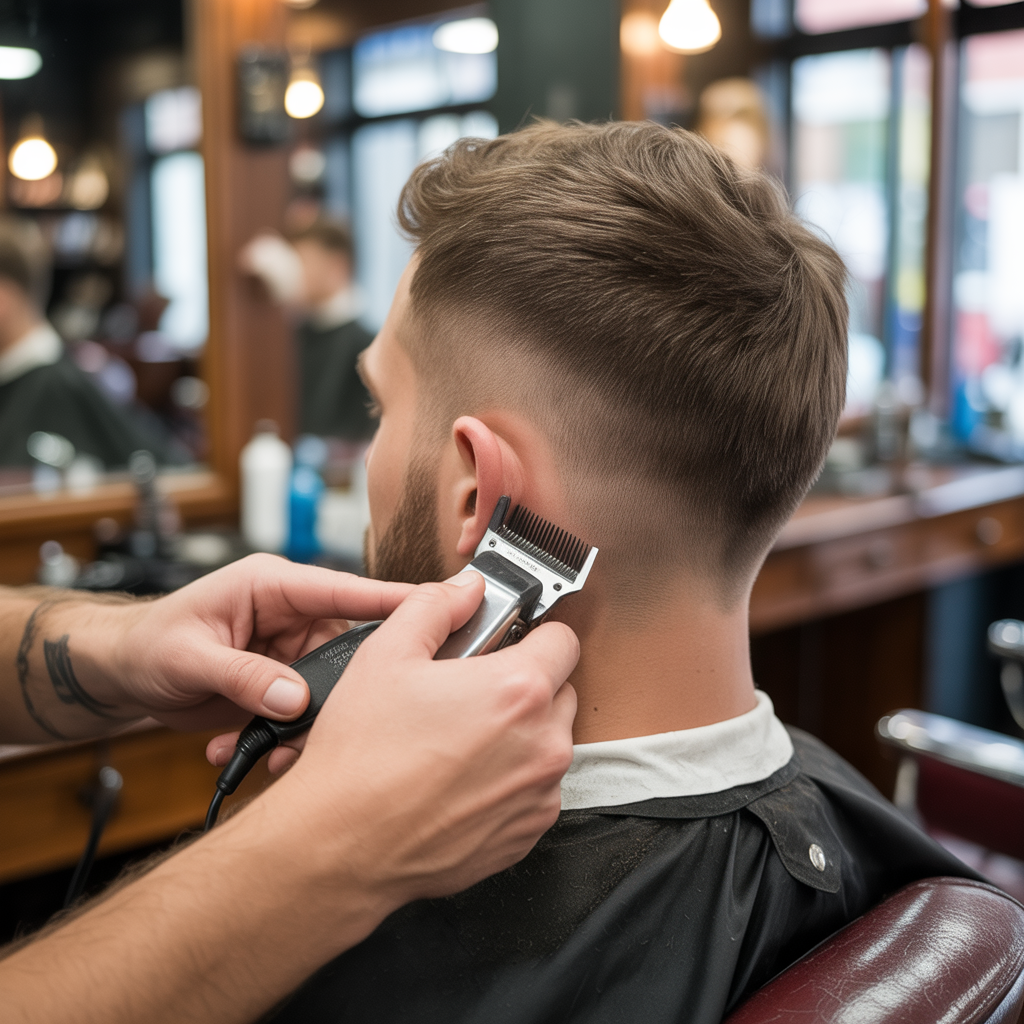
A skin fade begins its transformation the moment you leave the barbershop. Within the first three to five days, you’ll notice the shortest areas starting to show growth. This is perfectly normal, but it’s the first indicator of how quickly your particular hair grows. Some blokes can stretch their fades to three weeks; others start looking shaggy after ten days. Hair growth rate, hair texture, and the contrast between your hair colour and skin tone all influence how quickly your fade appears to fade.
The key areas that show wear first are always the same: the guideline where skin meets hair, the area around the ears, and the back of the neck. These spots grow at slightly different rates, which is why even a well-executed fade can start looking patchy after a fortnight. For those truly committed to the style—particularly if you’re wearing a skin fade as part of your signature look—recognising these patterns helps you plan your maintenance schedule accordingly.
The Recommended Maintenance Timeline
Week One: The Golden Period
Days 1-7 represent your fade at its absolute peak. The blend is seamless, the guideline is razor-sharp, and everything sits exactly as your barber intended. During this week, your only job is basic cleansing and moisturising. Wash your hair every two to three days with a quality shampoo, and if you’re using styling products on top, ensure you’re removing all residue. Product build-up around the fade area can make regrowth look more pronounced than it actually is.
Week Two: Early Maintenance Considerations
By day 8-14, you’re entering the phase where your fade starts showing its age. The skin at the bottom is no longer quite so skin-tight, and you’ll notice a subtle shadow developing. This is when some clients opt for a “fade refresh”—a shorter appointment focused solely on re-establishing the lower portions of the fade without touching the top. Not every barbershop offers this service explicitly, but most experienced barbers will accommodate the request. It typically takes 15-20 minutes and costs roughly half the price of a full cut.
For those managing their look at home, this is also the window where careful neckline maintenance becomes relevant. I’ll address this properly in the sections ahead, but week two is when that crisp neck edge starts to blur.
Week Three and Beyond: Decision Time
After fourteen days, most skin fades have transitioned from “fresh” to “needs attention.” Whether you can push to three weeks depends largely on your hair’s characteristics and your standards. Coarser hair tends to maintain the illusion of a fade slightly longer because the texture creates natural separation. Fine, straight hair shows every millimetre of growth and typically requires more frequent visits.
By week three, you’re almost certainly due for a full cut. The fade has lost its graduated effect, and the contrast that makes this style so appealing has diminished considerably. Some clients try to extend this further, but you’re fighting a losing battle past the three-week mark.
Home Maintenance Techniques
What You Can Safely Do
Neckline touch-ups are the most straightforward home maintenance task. Using a quality trimmer with an adjustable guard, you can keep the back of your neck tidy between appointments. The key is restraint—only address the obvious stragglers below your natural hairline. Never attempt to re-create the barber’s work on the fade itself. The moment you start adjusting the gradient at home, you’re creating more work for your barber to correct.
Keeping the area around your ears tidy is another reasonable home maintenance step. Those wispy hairs that grow just above and around the ear can be carefully trimmed with small scissors or a precision trimmer. Again, conservative is better. You’re tidying, not re-cutting.
What You Should Never Attempt
Resist the temptation to re-establish the guideline where your fade begins. This requires precise clipper work and an understanding of head shape that comes from professional training. I’ve seen countless DIY disasters where someone tried to “just clean up” their fade and ended up with a wonky line or, worse, a bald patch that takes weeks to grow out properly.
Similarly, never attempt to blend or adjust the fade gradient itself. The seamless transition in a proper skin fade is achieved through multiple clipper guards, precise hand movements, and constant cross-checking from different angles. What looks like a simple fix in the mirror becomes a noticeable mistake in natural lighting.
Products That Support Fade Longevity
Whilst no product can genuinely slow hair growth, certain approaches help maintain the crisp appearance of your fade. A lightweight moisturiser applied to the faded areas keeps skin healthy and reduces the ashy appearance that can develop on darker skin tones. This is purely aesthetic, but it makes a difference in how fresh your fade looks.
For the hair on top, avoid heavy products that can migrate down onto the fade. Pomades and waxes tend to travel, particularly if you’re applying them enthusiastically. When product settles on the shorter sections of your fade, it highlights regrowth and makes the whole style look less intentional. Stick to lighter products—clays, creams, or salt sprays—that stay where you put them.
Professional Maintenance vs. Home Care
There’s a reason professional barbers spend years perfecting their fade technique. The angle of the clipper, the tension of the hand, the slight scooping motion that creates that butter-smooth blend—these aren’t skills you’ll master watching YouTube tutorials. I’ve trained apprentices who took six months of daily practice just to achieve consistent basic fades, let alone the skin fades that require even more precision.
That said, understanding what your barber does helps you maintain their work between visits. When you know that your fade relies on a specific guideline placement and carefully calibrated guard changes, you’re less likely to interfere with it at home. The best maintenance schedule combines professional cuts every 10-14 days (or up to three weeks maximum) with conservative home tidying focused exclusively on necklines and ear areas.
Common Mistakes That Ruin Your Fade
Waiting Too Long Between Cuts
The single biggest mistake is treating a skin fade like a regular haircut. If you’re used to going six weeks between cuts with a standard short style, that timeline simply doesn’t apply here. A skin fade is a high-maintenance commitment, and trying to stretch it beyond its natural lifespan means you’ll spend more time looking scruffy than sharp.
Over-Washing
Washing your hair daily strips natural oils and can actually make regrowth more noticeable. The hair becomes drier and stands up more prominently, emphasising length. Every two to three days is sufficient for most people, though those with very oily scalps or who work in particularly grimy environments might need to adjust.
Using the Wrong Tools at Home
Not all trimmers are created equal. If you’re maintaining your neckline at home, invest in a proper barber-grade trimmer with sharp blades and reliable guards. Those cheap, dragging clippers pull hair rather than cutting it cleanly, creating an uneven result that’s immediately obvious. You don’t need to spend hundreds, but a mid-range Wahl or Andis trimmer makes a genuine difference.
Ignoring Your Barber’s Advice
When your barber suggests a maintenance schedule, they’re basing it on their assessment of your hair growth rate and lifestyle. Some clients insist they can go four weeks, then complain the fade doesn’t look good. If a professional who sees hundreds of fades monthly recommends fortnightly appointments, there’s usually a solid reason behind it.
Adapting Your Schedule to Your Lifestyle
Not everyone can commit to fortnightly barbershop visits. Work schedules, budget constraints, and simple logistics mean some compromises are necessary. If you genuinely cannot maintain the ideal schedule, consider a slightly higher fade that shows regrowth less obviously, or opt for a taper fade rather than a skin fade. A taper leaves slightly more length at the bottom, which doesn’t require quite the same maintenance frequency whilst still providing that clean, graduated look.
For professionals with client-facing roles, the investment in regular maintenance typically pays dividends. A sharp fade projects attention to detail and personal pride—qualities that matter in business contexts. Conversely, if you work remotely or in more casual environments, you might stretch your appointments slightly further without professional consequences.
Final Thoughts
Maintaining a skin fade isn’t complicated, but it does require commitment and realistic expectations. This isn’t a wash-and-wear hairstyle; it’s a deliberate choice that demands regular professional attention and careful home maintenance. The reward for that commitment is one of the sharpest, most contemporary looks in men’s grooming—a style that turns heads and demonstrates genuine attention to personal presentation.
The complete schedule comes down to this: professional cuts every 10-21 days depending on your hair growth, conservative home maintenance limited to necklines and ear areas, and products that support rather than compromise your fade. Master this routine, and you’ll spend far more time enjoying your immaculate fade than worrying about when it’s gone past its best.
FAQs
How often should I get my skin fade touched up?
Most skin fades require professional attention every 10-14 days to maintain that sharp, fresh appearance. Some people can stretch to three weeks, but this depends on hair growth rate and personal standards. Anything beyond three weeks and you’re no longer wearing a proper fade—you’re wearing regrowth.
Can I maintain a skin fade myself at home?
You can perform basic neckline tidying and keep the area around your ears clean, but attempting to recreate the fade gradient yourself almost always ends poorly. Skin fades require professional skills, proper equipment, and angles that are nearly impossible to achieve on yourself.
Why does my fade look patchy after two weeks?
Hair doesn’t grow uniformly across your entire head. The areas around your ears, the nape of your neck, and the crown all grow at slightly different rates, which creates the patchy appearance as your fade grows out. This is completely normal and why regular maintenance is essential.
What’s the difference between a skin fade refresh and a full haircut?
A fade refresh focuses exclusively on re-establishing the lower portions of your fade—typically from the guideline down—without touching the length on top. It’s quicker (15-20 minutes) and less expensive than a full cut, making it ideal for mid-cycle maintenance.
Do certain hair types maintain fades better than others?
Coarser, curlier hair often maintains the appearance of a fade slightly longer because the texture creates natural visual separation. Fine, straight hair shows every millimetre of growth more obviously and typically requires more frequent maintenance to look sharp.
Should I wash my hair differently with a skin fade?
Avoid daily washing, which strips natural oils and can make regrowth more prominent. Every two to three days is ideal for most people. When you do wash, be gentle around the faded areas and ensure you’re fully rinsing out any products.
Can I use hair clippers on the shortest part of my fade between cuts?
Absolutely not. Attempting to re-establish the guideline or adjust the fade gradient at home creates more problems than it solves. Even small mistakes in this area are highly visible and difficult for your barber to correct without essentially starting the fade from scratch.
How much should I budget monthly for skin fade maintenance?
Assuming cuts every two weeks at an average price of £20-30 per visit, budget £40-60 monthly for professional maintenance. This varies by location and barber experience, but skin fades are genuinely more expensive to maintain than traditional short styles.
Why does my fade look better some weeks than others from the same barber?
Your hair’s condition, how recently you washed it, product residue, and even minor changes in how you’re sitting during the cut all affect the final result. Additionally, if you’re not maintaining consistent appointment intervals, your barber is working with different amounts of regrowth each time, which influences the outcome.
What products help keep a skin fade looking fresh longer?
No product genuinely slows hair growth, but a lightweight moisturiser on the faded areas prevents ashiness on darker skin tones and maintains a healthy appearance. For the top, use lighter styling products (clays, creams) that won’t migrate down onto the fade and highlight regrowth.