
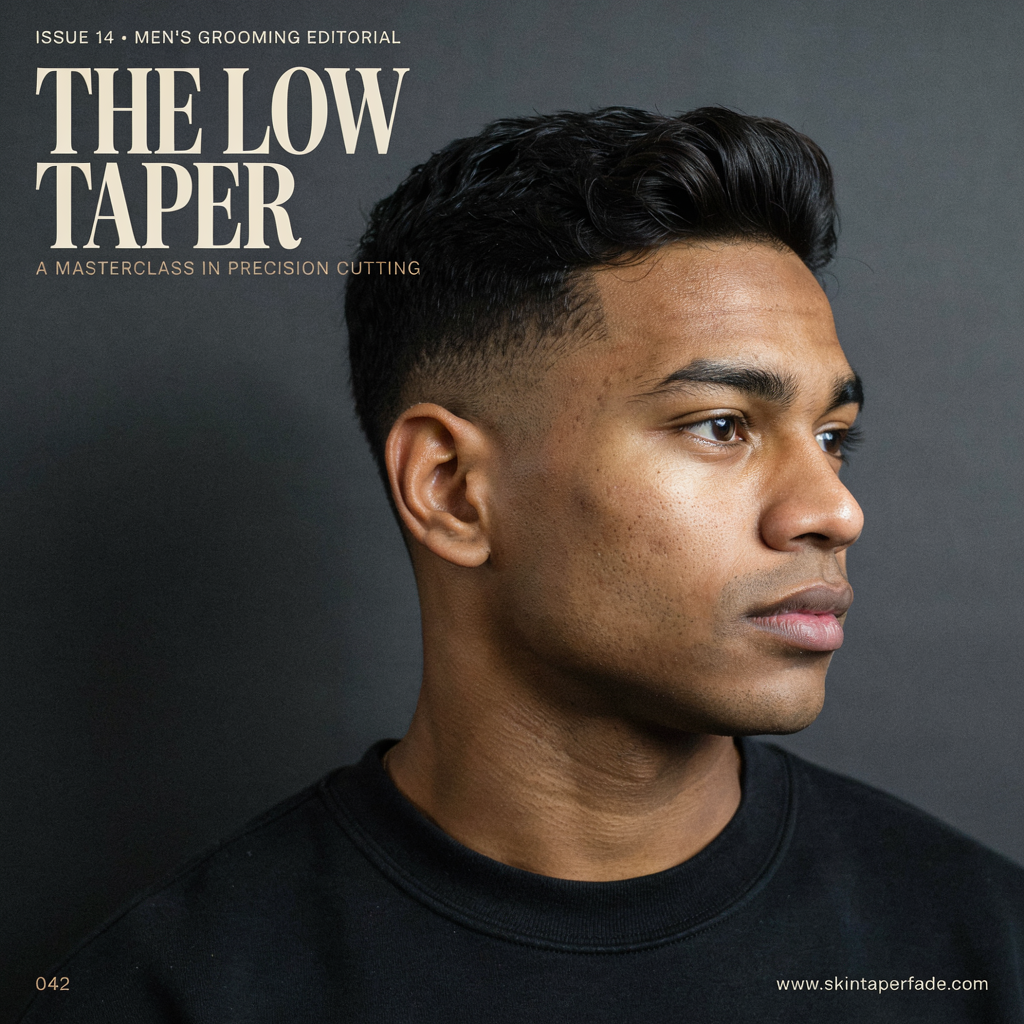
A low taper fade cleans up the hair around the sideburns and neckline while leaving most of the sides intact. From the front, you get a sharper frame around the temples. From behind, the nape looks tidier. Your curls, waves or longer hair on top can still carry the overall style.
That balance is why the haircut works with so many looks. But “low taper fade” can mean different things in different barbershops. The shorter section might retain some visible hair or go right down to the skin. Before the clippers come out, decide how high you want the blend and how close you want the bottom.
For an overview of the whole haircut family, see our complete guide to taper haircuts for men.
Low Taper Fade
What is a low taper fade?
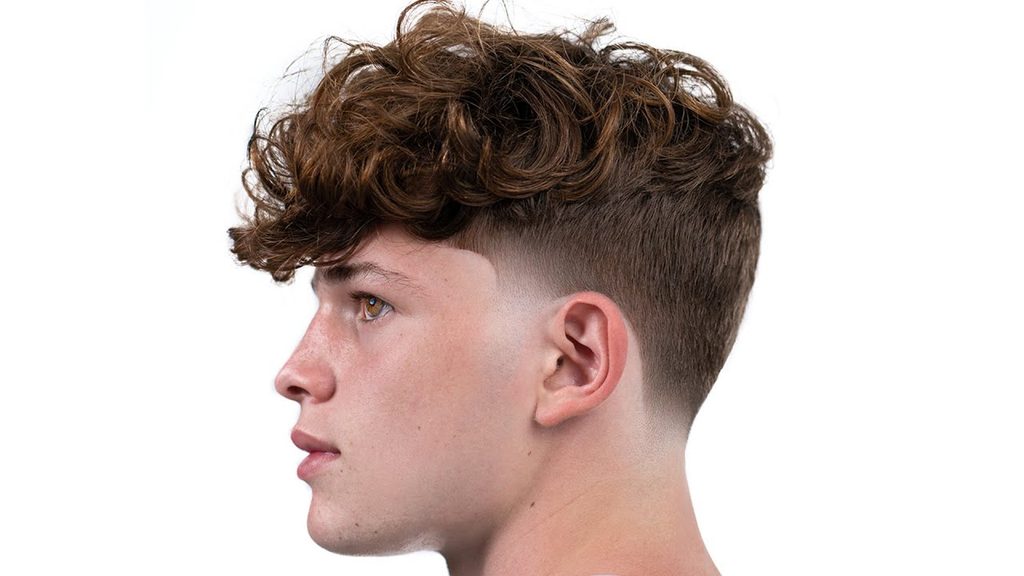
A low taper fade is a gradual reduction in hair length concentrated near the bottom edges of the haircut. Around the front, the blend typically starts at the sideburns or lower temple area. At the back, it tidies the hair near the neckline. The upper sides stay fuller than they would with many conventional fades.
Low describes the position of the blend. Taper fade describes the gradual transition towards shorter hair. Neither word, on its own, guarantees a skin finish. If you want bare skin visible at the lowest point, ask for a low skin taper fade. If you prefer a softer outline, ask the barber to leave visible hair at the shortest point.
A low taper fade is not one fixed template. Your barber should adjust the shape to your hairline, head shape, hair density and the haircut you want on top.
What does it look like from each angle?
- Front: The sideburns and the area near the temples look cleaner, but the upper sides still have weight.
- Side: A short blend rises a limited distance above the ear or sideburn. The longer side hair connects into the top rather than being removed across a large area.
- Back: The nape blends from shorter hair at the bottom into the hair above. The barber can keep the neckline natural or make it more sharply outlined.
Reference photos should show at least a side and back view. A front-only picture rarely tells your barber how much of the nape to taper.
Low taper fade vs low fade
These labels overlap, and barbers do not use them identically. In common usage, a low taper fade focuses the shortest blend around the sideburns and neckline, preserving more hair around the sides. A low fade usually carries a continuous band of shorter hair around the sides and back, still positioned low on the head.
| Feature | Low taper fade | Low fade |
|---|---|---|
| Main focus | Sideburns and neckline | Lower sides and back more continuously |
| Hair left on upper sides | Usually more | Often less |
| Overall effect | Targeted edge clean-up | More visible all-round blend |
| Can reach skin? | Yes, if requested | Yes, if requested |
If you want a taper, point to the exact area you want shortened and say, “Please keep the hair above the ears fairly full.” A photo settles the distinction better than the haircut name alone.
Low taper fade vs mid taper fade
The main difference is height. A low taper keeps the transition close to the edges; a mid taper takes it farther up around the temples and back. A mid taper can reveal more of the blend from the side, while a low taper preserves more of the natural shape.
If you are trying a taper for the first time, starting low gives your barber room to adjust the cut during the appointment. Ask to see the placement before taking it higher.
Low taper fade styles for different hair
Low taper fade with curly hair
The short edges create a defined frame while the curls keep their volume. Tell your barber whether you want a rounded shape, a longer curly fringe or height through the top. Curls can sit differently once dry, so a reference photo with a similar curl pattern helps.
For a softer finish, leave a little visible hair at the temples. For a sharper contrast, ask for a skin finish only at the lowest part of the taper.
Low taper fade with Afro textured hair
A low taper can sharpen the temples and nape without taking away the fullness of an Afro. The barber can keep the outline natural or add a line-up. Those are separate choices: a low taper does not require a squared hairline.
If you want a line-up, ask the barber to follow your natural hairline rather than moving it back for a straighter edge. Think about the shape you want the style to have after a couple of weeks of growth, too.
Low taper fade with waves
Keeping the upper sides relatively full can let the wave pattern remain the focus. Explain your brushing direction and how much length you want left on top. A close taper at the edges adds definition without requiring the whole side to be faded.
Low taper fade with straight hair
A low taper works with a short crop, side part, quiff or longer swept top. Straight hair often shows changes in length clearly, so ask for a smooth connection between the short temple area and the fuller side hair. If the sides stick out as they grow, mention that to your barber.
Low taper fade with wavy hair
Leave enough length for the wave to form. A soft taper around the ears and neck can remove bulk while preserving movement on top. You can wear the front loose or brush it back, depending on your natural growth pattern.
Low taper fade with fine hair
The cut can tidy the perimeter while retaining some visual weight at the sides. If the top is sparse, discuss how short you want the edges before choosing a skin finish. A softer blend may feel more balanced with your hair density.
Popular ways to wear a low taper fade
Textured crop: Keep the top short and slightly messy, with a low blend to clean up the outline. This works well if you want a quick morning routine.
Curly fringe: Let curls fall forward while the temple and neck tapers give the cut shape. Ask for enough length to account for shrinkage.
Quiff: Leave more length at the front and use the low taper to sharpen the sides without losing too much fullness.
Buzz cut: A short top with a low taper adds detail to a simple haircut. Agree on the top length separately from the fade.
Side part: Keep the upper sides long enough to comb neatly. Choose a softer taper for a restrained finish or a skin taper for stronger contrast.
Low taper fade with a beard: The barber can blend the sideburn into the beard. Specify whether you want the beard faded as well or simply tidied around the cheeks and neckline.
Low taper fade with a longer top: The contrast can frame longer waves, curls or a swept-back style. Make sure the hair above the taper connects to the top in a way you like.
Should you choose a skin or non-skin finish?
A skin finish takes the lowest section down to bare skin. It looks crisp immediately after the cut and shows regrowth sooner. A non-skin finish keeps a little hair visible at the bottom. It tends to look softer and can suit someone who wants a less dramatic transition.
You can ask for a low taper in either finish. If your scalp is sensitive to very close cutting, tell your barber and discuss a less close option. The best finish depends on your preferred look and comfort, not on a rule about which one is “correct.”
How to ask your barber for a low taper fade
Show a front, side and back reference if possible. Then say:
“I would like a low taper fade around my sideburns and neckline. Please keep the blend low and leave the upper sides full. Keep about [your preferred length] on top. I want the shortest part to [stay slightly dark / go to skin], and I prefer a [natural / sharper] hairline.”
Before the cut, confirm five details:
- Height: How far above the sideburns and nape will the short blend go?
- Shortest length: Will the bottom retain hair or show skin?
- Top length: How much hair should stay for your usual styling routine?
- Hairline: Do you want a natural edge or a deliberate line-up?
- Beard: Should the sideburn blend into it?
Do not rely only on clipper guard numbers. They describe part of the process, but the finished look also depends on the blend, the lever setting and how your hair grows. Photos and plain descriptions make your preference clearer.
How to style and maintain the cut
Most of the daily styling happens on top. For a short crop, work a small amount of matte product through dry hair. For curls, use a product that suits your hair and let the curls settle before adjusting the shape. For a quiff or side part, comb or dry the hair in the direction you want it to sit.
The short edges will become less sharp as they grow. A skin taper may prompt a tidy-up sooner than a softer, non-skin finish. Check how the cut looks after roughly two to four weeks and arrange future visits around the amount of regrowth you are comfortable with. You do not need to follow a fixed schedule.
Be careful with at-home trimming. Taking a little extra off at the temple or pushing the nape higher can turn a low taper into a different cut. If you mainly want the edges refreshed, ask your barber whether they offer a quick tidy-up between full haircuts.
Common mistakes to avoid
Asking for “low” without showing where: Different barbers may picture different blend heights. Point to the sideburns and back of the neck.
Assuming every taper goes to skin: Specify whether you want a skin or non-skin finish.
Showing only the front of a haircut: The back neckline makes a large difference to how a low taper looks.
Cutting into the upper sides: If you want to preserve curl volume, waves or a longer silhouette, say so before the barber removes bulk.
Requesting a precise hairline you cannot maintain: A sharp line-up grows out visibly. A natural edge may better suit your preferred upkeep.
Frequently asked questions
Is a low taper fade the same as a low skin fade?
No. A low skin fade generally takes a broader section around the lower sides and back down to skin. A low skin taper fade usually keeps that close-cut section concentrated at the sideburns and neckline. Terminology varies, so use photos to confirm the coverage.
Does a low taper fade show skin?
It can, but it does not have to. Ask for a low skin taper if you want bare skin at the shortest point, or a low taper with some visible hair left if you prefer a softer finish.
Can you get a low taper fade with long hair on top?
Yes. The taper changes the edges, so you can keep a longer fringe, curls, waves or swept-back hair. The barber should connect the longer side hair to the top deliberately.
Does a low taper fade work with curly hair?
Yes. It can define the outline while leaving most curls intact. Discuss the top shape and how your curls shrink when dry.
How often should I refresh a low taper fade?
It depends on your hair growth and how sharp you want the edges. A close skin finish may need attention sooner than a soft taper. Assess it after a couple of weeks and set your schedule from there.
Is a low taper fade suitable for work or school?
A subtle, non-skin version can look restrained, while a skin finish or strong line-up is more noticeable. Choose the amount of contrast that suits your setting and preferences.
Final thoughts
A low taper fade offers a cleaner outline while keeping the haircut’s main shape. The most useful decision is not the name: it is how low the blend stays, how short the bottom gets and how much hair remains above it. Bring clear photos and tell your barber which details matter to you.
For more options, return to our taper haircuts for men guide.