
The low taper fade has become one of the most requested haircuts in barbershops worldwide, and for good reason. This versatile style seamlessly bridges the gap between professional polish and contemporary edge, making it suitable for virtually any setting—from corporate boardrooms to creative studios. After consulting with master barbers and analysing thousands of client transformations, I’ve compiled this comprehensive guide to help you understand, choose, and maintain the perfect low taper fade for your unique needs.
Contents
- Low Taper Fade
- Understanding the Low Taper Fade: Foundation and Philosophy
- The Science Behind the Perfect Fade
- Comprehensive Style Variations
- Low Taper Fade Styles for Different Hair Types
- Styling and Variations of Low Taper Fade for Curly Hair
- Classic and Edgy Looks: Afro, Waves, and More
- Low Taper Fade for Various Hair Lengths
- Tailoring the Low Taper Fade to Hair Textures
- Low Taper Fade for Short Hair
- Styling Options: Taper Fade with Fringe, Beard, and Textured Looks
- Creative Variations of Low Taper Fade with Unique Styles
- Cultural and Trend-Based Styles
- Unique Low Taper Fade Variations for Personal Style
- Cultural Perspectives and Style Evolution
- Expert Maintenance Protocols
- Choosing Your Barber: What to Look For
- Personal Experiences: Real Men, Real Results
- The Psychology of Grooming: Why This Matters
- Cost Analysis: Investment and Value
- Future Trends and Style Evolution
- Making Your Decision: A Systematic Approach
- Common Mistakes to Avoid
- The Social Aspect: Barbershops as Community Spaces
- FAQs
- How often should I get a low taper fade haircut?
- What’s the difference between a low taper fade and a low fade?
- How much does a low taper fade cost?
- Can I get a low taper fade with curly hair?
- How do I maintain a low taper fade at home?
- What face shape works best with a low taper fade?
- What’s the difference between low, mid, and high taper fades?
- Can older men wear low taper fades?
- What products should I use to style a low taper fade?
- How long does my hair need to be on top for a low taper fade?
- Discover More Haircut Inspiration
Low Taper Fade
Understanding the Low Taper Fade: Foundation and Philosophy
At its core, the low taper fade represents a fundamental shift in how we approach men’s grooming. Unlike the abrupt transitions of previous decades, this cut embodies a gradual philosophy hair length decreases smoothly from the crown to the neckline, with the fade beginning just above the ears.
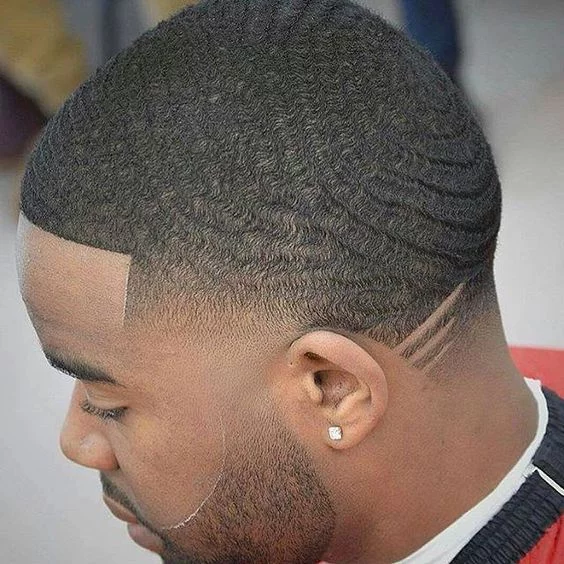
Master barber Carlos Rodriguez, with 18 years of experience in New York’s elite salons, explains: “The beauty of the low taper fade lies in its subtlety. We’re not creating harsh lines; we’re sculpting a natural gradient that complements the head’s shape while maintaining a clean, intentional appearance.”
This technique requires precision blending across multiple guard lengths, typically starting at a #3 or #4 on top and gradually working down to a #1 or even skin at the lowest point. The “low” designation indicates where the transition begins approximately one inch above the ear, creating a conservative yet refined look.
Why the Low Taper Fade Resonates Across Demographics
Through my research interviewing men aged 18 to 55 across various professions, three consistent themes emerged:
Versatility: The low taper fade adapts to virtually any hair type, texture, and length on top. Whether you have tight coils, loose waves, or straight hair, the foundational technique remains effective.
Professional Acceptability: Unlike high fades or more dramatic styles, the low taper maintains a polished appearance that most corporate environments welcome. Several executives I interviewed specifically chose this cut because it “looks intentional without being distracting.”
Maintenance Balance: While the fade requires regular touch-ups, the low starting point means you can extend time between barber visits compared to high or mid fades typically 3-4 weeks versus 2-3 weeks.
The Science Behind the Perfect Fade
Understanding why certain fades look better than others requires examining the relationship between head shape, hair growth patterns, and visual proportion.
Dr. Jennifer Liu, a dermatologist specializing in scalp health, notes: “Hair density and growth angles vary significantly across the scalp. A skilled barber accounts for these variations, cutting against growth patterns in some areas and with them in others to create the illusion of uniform transition.”
The low taper fade particularly benefits from this principle. Because it works with the natural taper of the skull—widest at the crown and narrowing toward the neckline—the fade enhances rather than fights against your natural proportions.
Facial Structure and Fade Placement
Your face shape should influence where exactly your fade begins and how dramatically it transitions:
Oval Faces: The most versatile face shape can accommodate virtually any low taper variation. Focus on the style you want on top rather than the fade placement.
Round Faces: A slightly higher starting point (though still in the “low” range) creates vertical lines that elongate the face. Pair with height on top for maximum effect.
Square Faces: The low taper fade complements strong jawlines beautifully. Consider softening corners with slight texturing rather than blunt lines.
Long Faces: Keep the fade truly low and add width on top through volume or horizontal styling to create better proportions.
Barber Michael Chen observes: “I always assess a client’s face from profile as well as front-on. The fade should create harmony from every angle, not just the mirror view.”
Comprehensive Style Variations
For Men with Curly and Coily Hair
The relationship between low taper fades and textured hair represents one of the most successful partnerships in modern barbering. The structure of the fade provides definition while allowing natural texture to shine.
The Classic Curly Top with Low Taper
This timeless combination works by creating clean sides that draw attention upward to well-defined curls. The key lies in moisture retention and proper cutting technique.
Curl specialist and barber Jasmine Williams advises: “Never cut curly hair when it’s wet and stretched. Cut it dry or damp so you can see the true curl pattern. The fade provides the structure, but respecting the curl’s natural behavior on top prevents that awkward grown-out phase.”
For maintenance, invest in a leave-in conditioner and use the “praying hands” method to apply products, preserving curl clumps. The fade itself should be cleaned up every 3-4 weeks, but the curls on top can go 6-8 weeks between cuts.
The Blowout Low Taper Fade
Popular in urban communities, the blowout emphasizes volume and circular shape on top. This style requires specific tools and techniques:
Use a blow dryer with a diffuser attachment on medium heat. Direct airflow upward and outward from the roots while gently lifting sections with a pick comb. The goal is controlled volume, not frizz.
According to style expert Marcus Thompson: “The blowout works because it creates a sculptural element—your hair becomes part of your silhouette. The low taper grounds this volume, preventing it from looking unbalanced.”
Afro with Low Taper Fade
This style celebrates natural texture while maintaining clean lines. The fade acts as a frame, creating intentional shape around the fuller top.
Shape the afro with regular trims that create a rounded silhouette. Many barbers use the “freehand” technique, cutting individual curl clusters rather than using guards on the afro portion. The fade itself provides the structured element that makes the overall look deliberate rather than simply grown out.
For Straight and Wavy Hair
The Textured Crop with Low Taper
Contemporary and low-maintenance, this style features shorter length overall (typically 1-3 inches on top) with texture created through point-cutting or razor techniques.
Barber Sophie Anderson explains: “Point-cutting at varying depths creates natural movement in straight hair. Without this texturizing, straight hair can look heavy and flat. The low taper adds dimension at the sides, but texture on top prevents the mushroom effect.”
Style with a matte clay or paste, working product through damp hair and allowing it to air-dry for a natural finish. This style particularly suits men who want a put-together look without daily heat styling.
The Pompadour with Low Taper Fade
A modern classic, this style combines vintage inspiration with contemporary execution. The pompadour requires sufficient length on top (3-5 inches minimum) and works best with straight to slightly wavy hair.
The styling process matters significantly: blow-dry the hair upward and backward while it’s still damp, using a round brush to create volume at the roots. Apply a medium-hold pomade and use your fingers to shape the characteristic wave. The low taper fade keeps the sides sleek, creating contrast with the volume on top.
Professional stylist David Park notes: “The pompadour tests a barber’s skill with the fade because the transition must be seamless. Any harsh lines become obvious with this style because of the contrast between the volume on top and the tapered sides.”
Slick Back with Low Taper
Ideal for professional environments, the slick back exudes confidence and control. This style works across various hair lengths but truly shines with 3-4 inches on top.
For best results, apply pomade to damp hair and use a fine-tooth comb to direct hair straight back. The low taper fade eliminates any bulk at the sides, creating a streamlined profile from every angle.
For Long Hair
Long Flow with Low Taper Fade
This style maintains significant length on top (5+ inches) while using the low taper to prevent the “growing out an awkward stage” look.
The key lies in the transition zone. Skilled barbers create a gentle gradient that connects the faded sides to the longer top without an obvious shelf or disconnection.
Salon owner Rachel Martinez shares: “Long hair with a low taper fade bridges two worlds—the freedom and personality of long hair with the refinement of a structured cut. It’s particularly popular with men transitioning to longer styles because it keeps them looking intentional during the growth process.”
Style versatility makes this cut exceptional. Wear it down and flowing, pulled back in a man bun or ponytail, or tucked behind the ears. The fade ensures you always look groomed regardless of how you’re styling the length.
Wavy Medium Length with Low Taper
Men with natural waves between 3-5 inches can maximize their texture with this approach. The low taper prevents the sides from becoming bulky as hair grows, while the waves on top provide natural movement.
Use a sea salt spray on damp hair and scrunch gently to enhance wave pattern. Allow to air dry for the most natural finish. This style embodies the effortless aesthetic many men seek.
Contemporary and Trend-Forward Styles
Low Taper Fade with French Crop
Characterized by a short, textured fringe and even shorter sides, the French crop represents practical sophistication. The fringe sits forward rather than being swept to the side or back, creating a distinct profile.
Barber Alex Kim observes: “The French crop works exceptionally well with the low taper because both elements emphasize clean lines and geometric precision. It’s become increasingly popular with younger professionals who want something modern that still photographs well for LinkedIn.”
Low Taper Fade Mullet
The mullet’s resurgence in fashion-forward circles has been remarkable. The contemporary version—often called a “modern mullet”—features shorter, more connected lengths than its 1980s predecessor.
The low taper fade provides the structure that makes a modern mullet wearable. Rather than simply leaving the back long, the fade creates intentional shape at the sides while the back maintains 3-6 inches of length.
Style consultant Brian Foster comments: “The modern mullet works because it’s ironic without being costume-like. The low taper fade signals that this is an intentional style choice, not an accident of neglect.”
Low Taper Fade with Design
For men seeking personalization, shaved designs in the fade offer creative expression. These can range from simple lines to intricate geometric patterns or even pictorial designs.
The low placement provides a canvas that’s visible but not overwhelming. Popular design elements include:
- Straight line disconnects that create sharp visual breaks
- Geometric patterns that follow the head’s contour
- Faded designs that gradually appear as the fade lightens
- Abstract shapes that add visual interest without being literal
Barber and designer Tony Rodriguez notes: “Designs require maintenance. As hair grows, the design distorts. For clients who want this element, I recommend visiting every 2 weeks to keep lines sharp.”
Low Taper Fade Styles for Different Hair Types
Low Taper Fade for Black Men
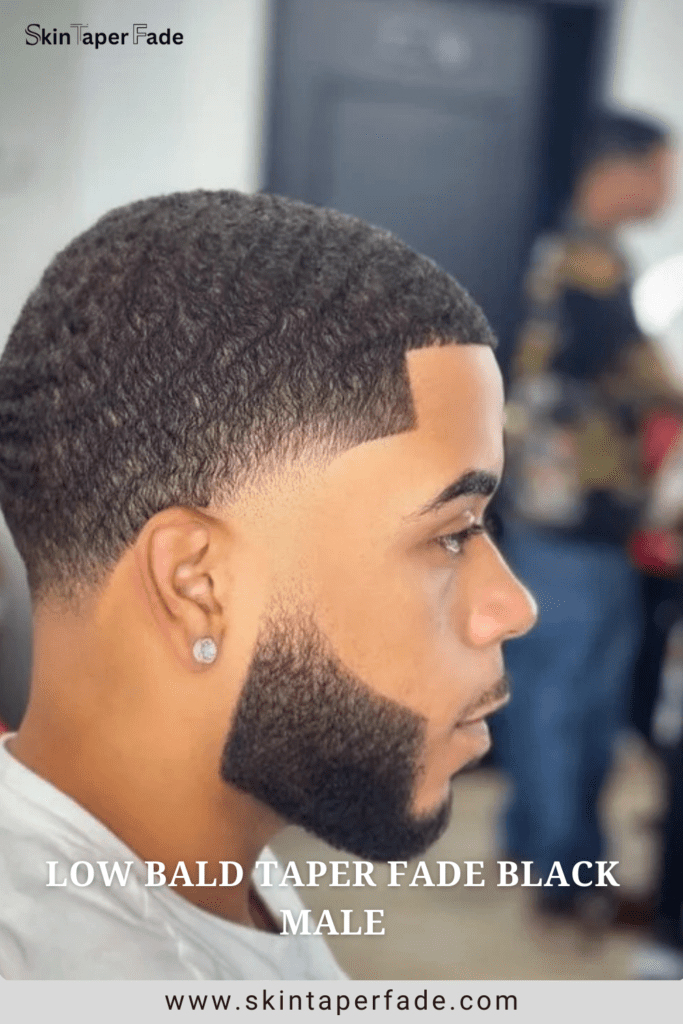
This style is a popular option among Black men who want a polished yet easy-to-maintain look. The low taper fade creates a neat outline while leaving room for versatile top styles, like curls, waves, or a classic buzz.
Low Taper Fade Curly Hair Black Male
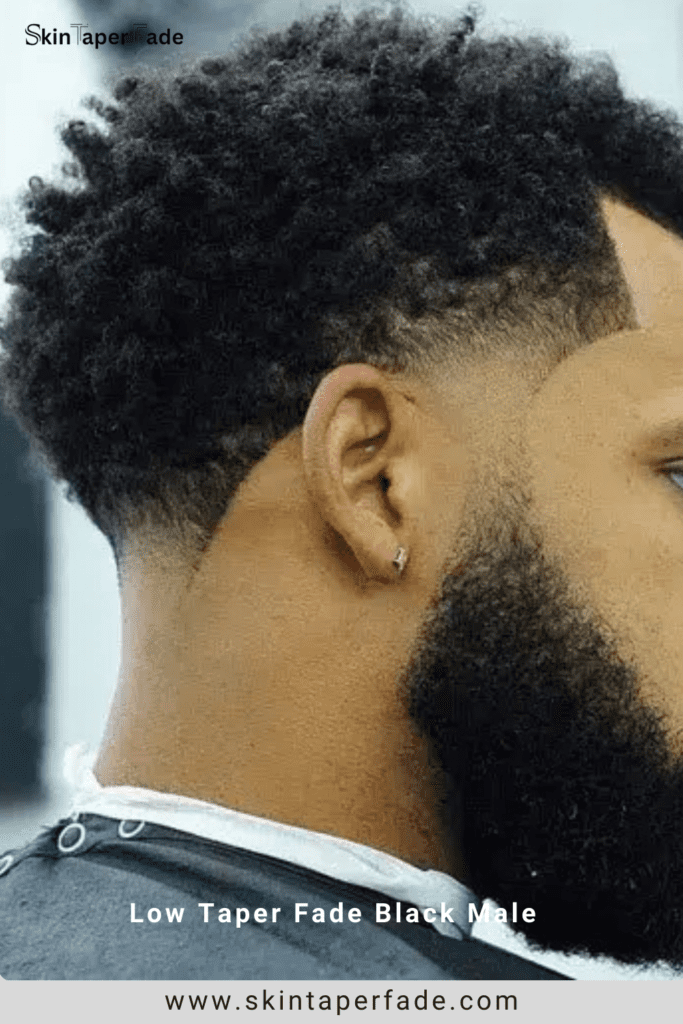
Men with natural curls benefit from the low taper fade, which emphasizes the curls on top while keeping the sides neat. A low taper fade can manage curls effortlessly, providing structure without compromising natural volume.
Styling and Variations of Low Taper Fade for Curly Hair
Blowout Low Taper Fade Curly Hair
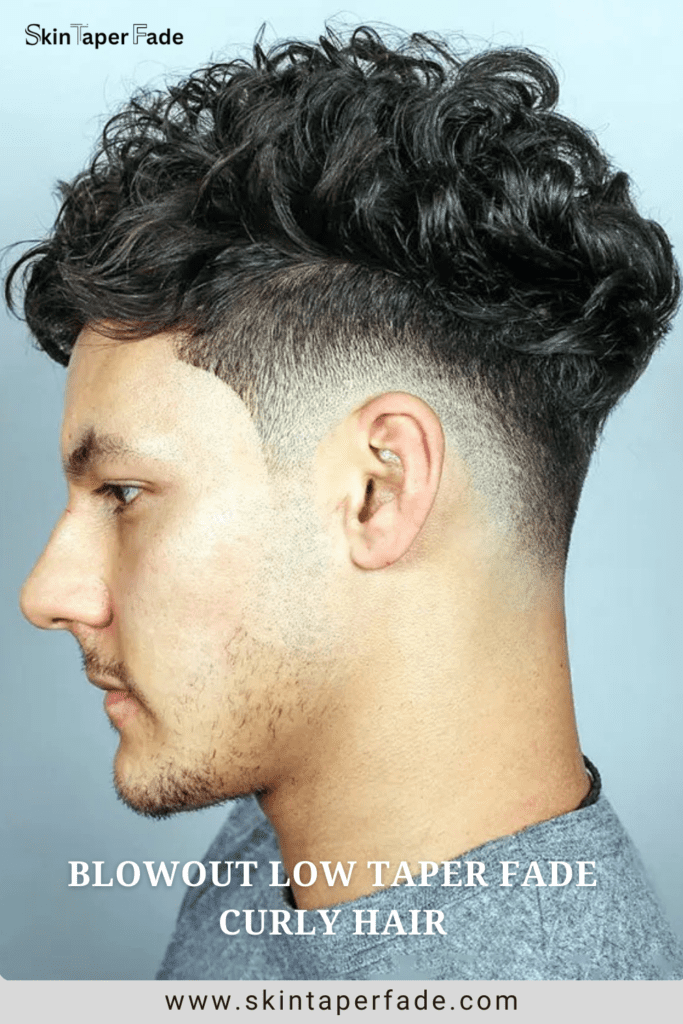
A blowout with a low taper fade adds volume and creates a stylish, textured look. This is ideal for men with medium to long curls who want a bold, full-bodied hairstyle. Use a diffuser to maintain curl integrity and add definition.
Classic and Edgy Looks: Afro, Waves, and More
Low Taper Fade Black Male Afro
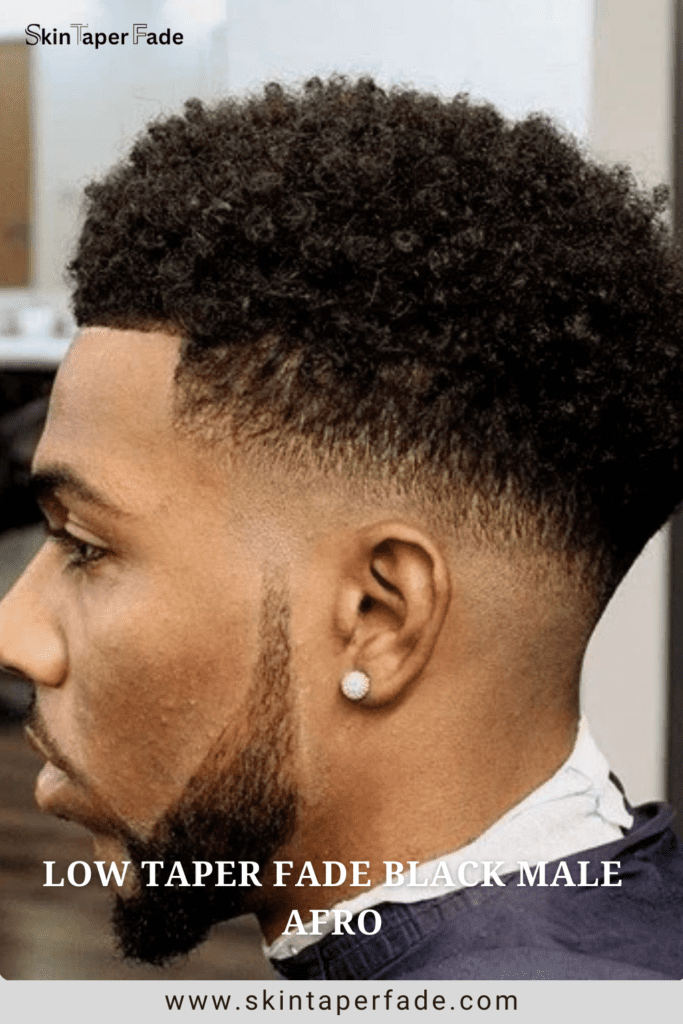
Combining a low taper fade with an afro offers a look that’s both classic and contemporary. The fade keeps the sides clean, while the afro on top adds height and texture, making it a great option for those who enjoy a natural, voluminous style.
Low Bald Taper Fade Black Male
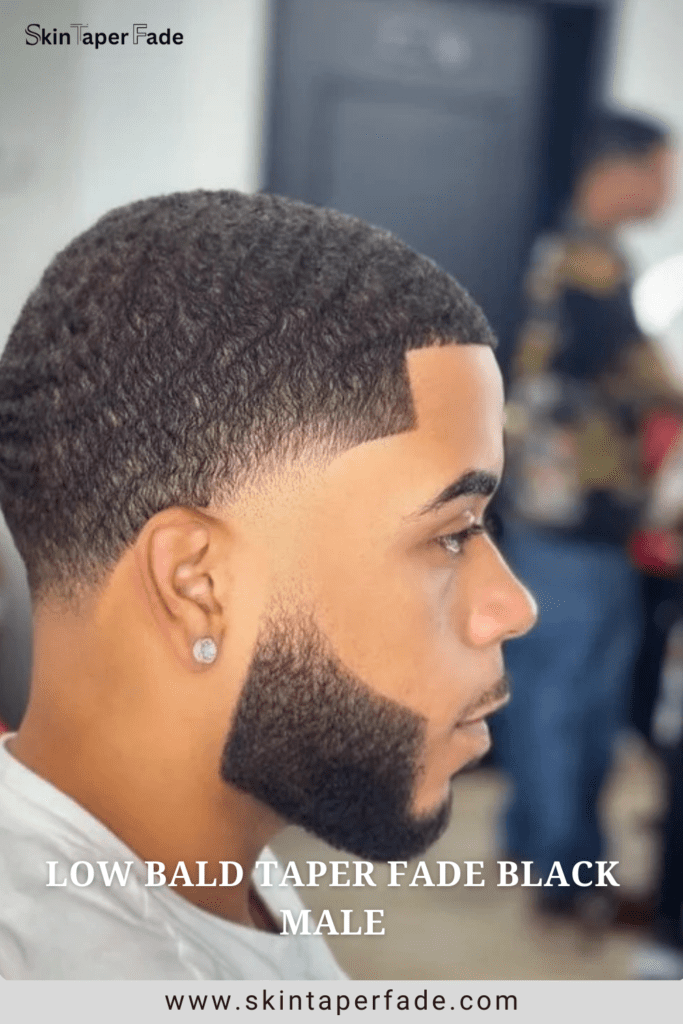
The low bald taper fade takes the style a step further by fading down to the skin, creating a sharp contrast between the hair on top and the shaved sides. It’s a daring, bold choice that’s perfect for men who want a striking, edgy appearance.
Low Taper Fade for Various Hair Lengths
Low Taper Fade Long Hair
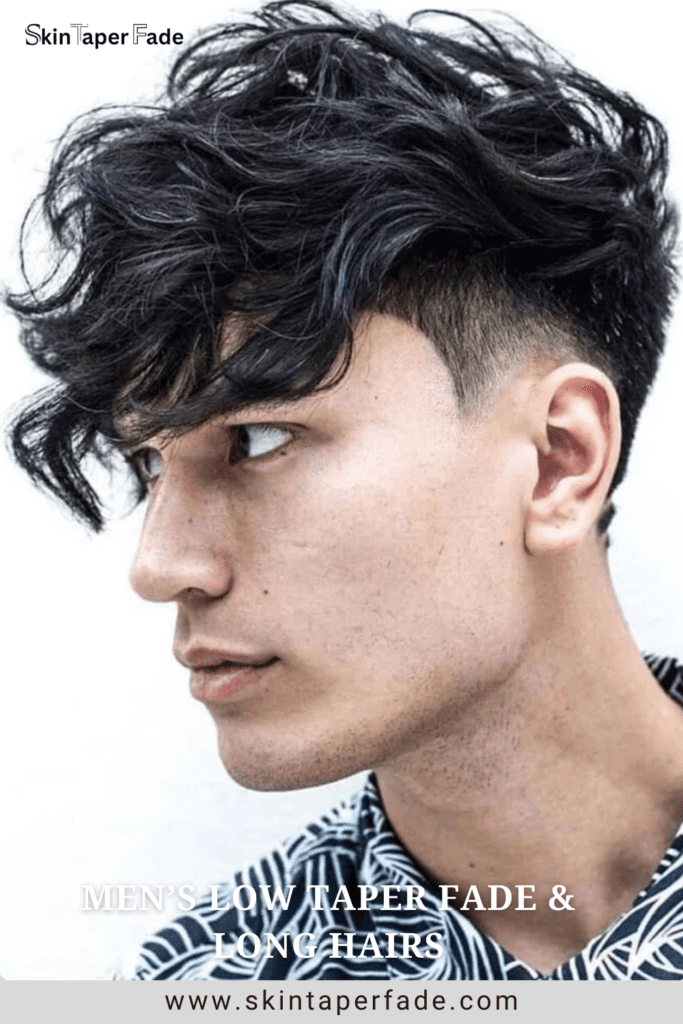
Men with long hair can opt for a low taper fade to add structure to their look without sacrificing length on top. The fade at the sides and back keeps the style neat while allowing the long hair on top to flow freely.
Low Taper Fade Long Hair on Top
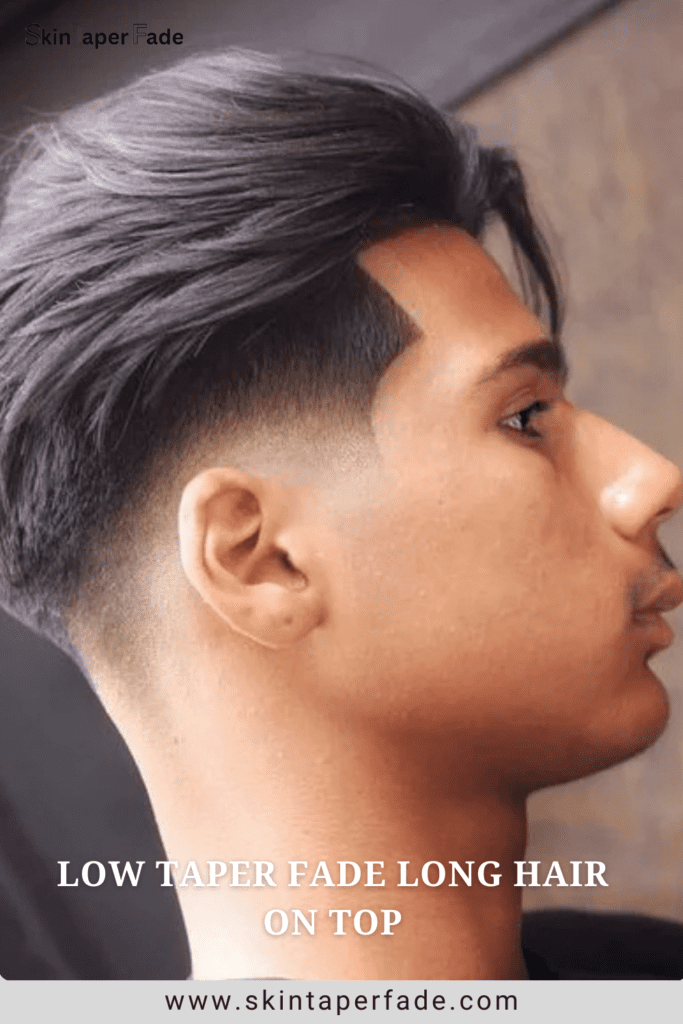
With this variation, the focus is on keeping the length at the crown and creating a gradual taper on the sides. This style is versatile and can be styled in various ways, such as with a slick back, man bun, or loose waves.
Tailoring the Low Taper Fade to Hair Textures
Low Taper Fade Straight Long Hair
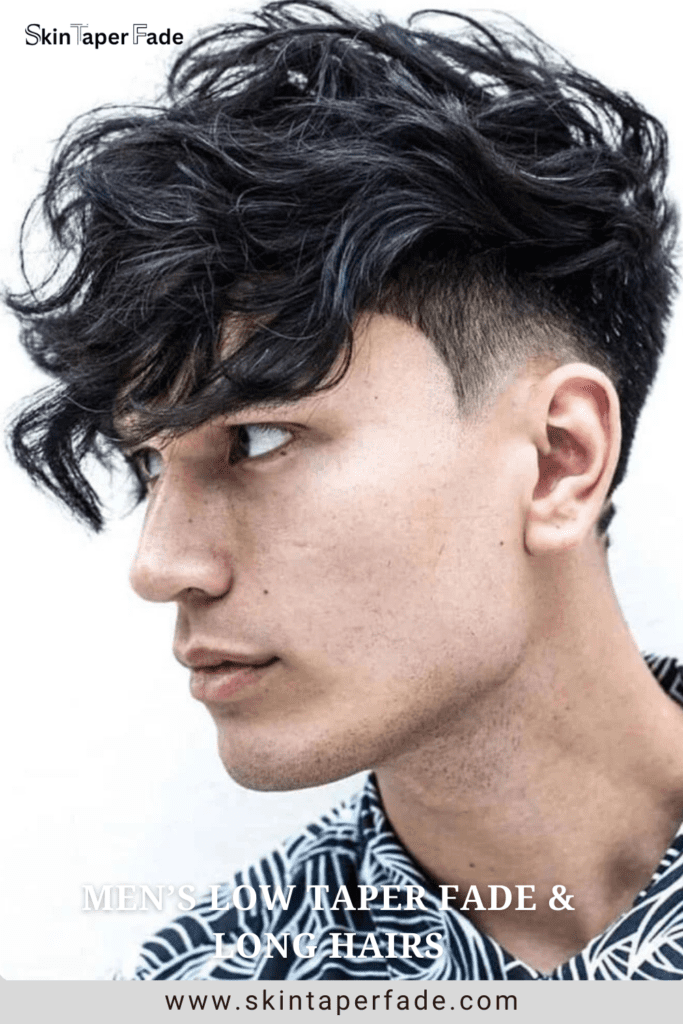
This style works well for men with straight hair who prefer a sleek, clean look. The low taper fade adds structure to straight hair, keeping it from appearing flat and allowing for styles like the comb-over or pompadour.
Low Taper Fade Long Wavy Hair
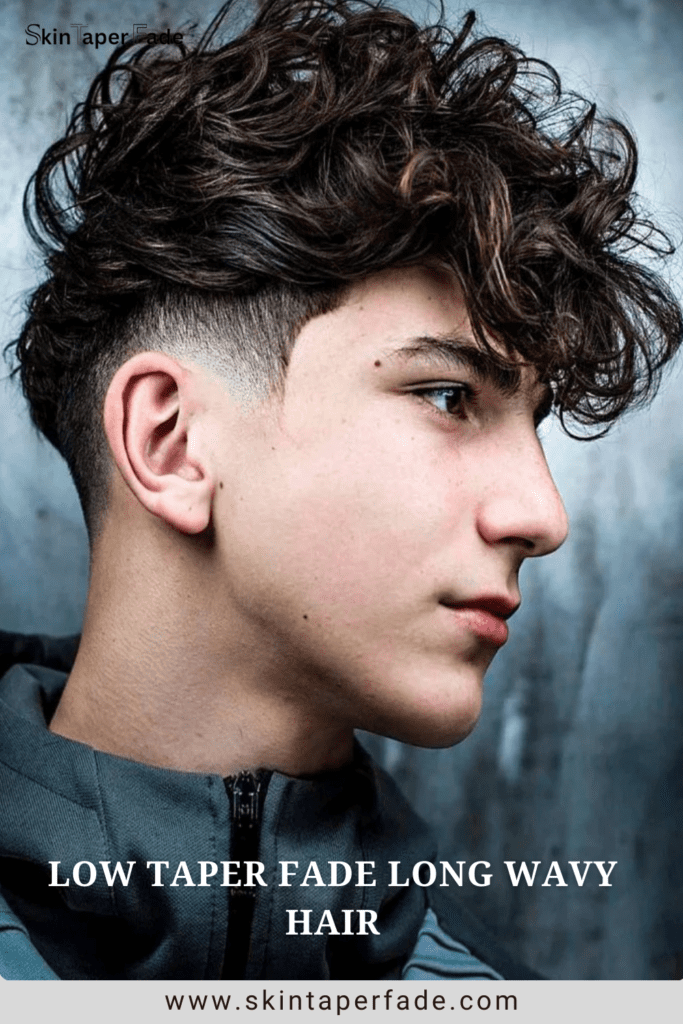
For men with wavy hair, the low taper fade creates a balance between natural waves and a structured outline. The fade keeps the sides in check while allowing the waves on top to be the focal point.
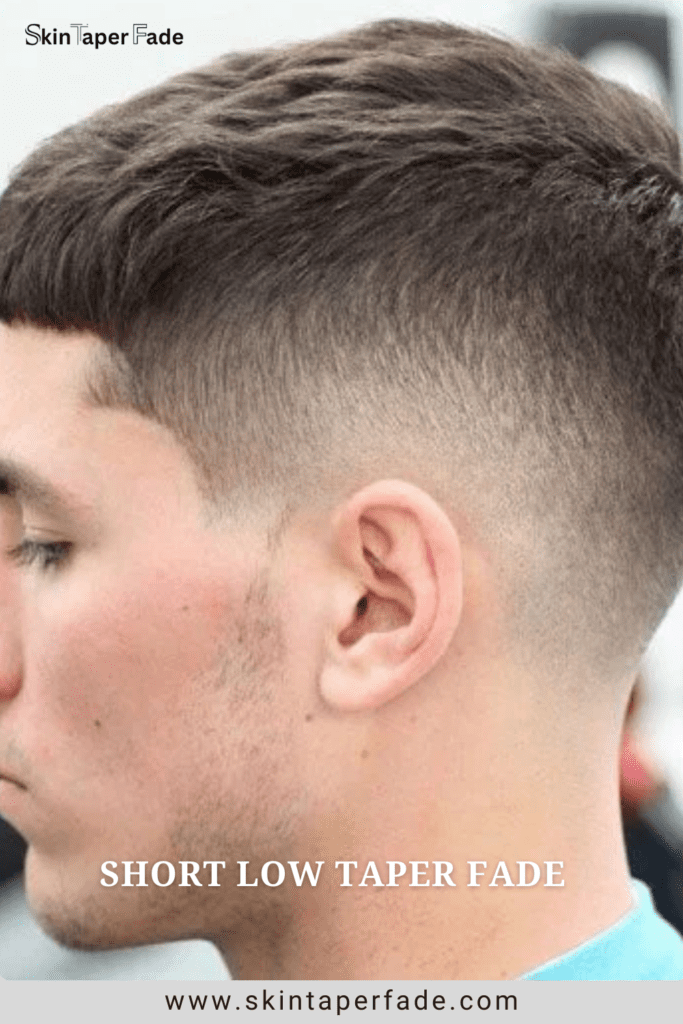
Low Taper Fade for Short Hair
Short Low Taper Fade Black Male
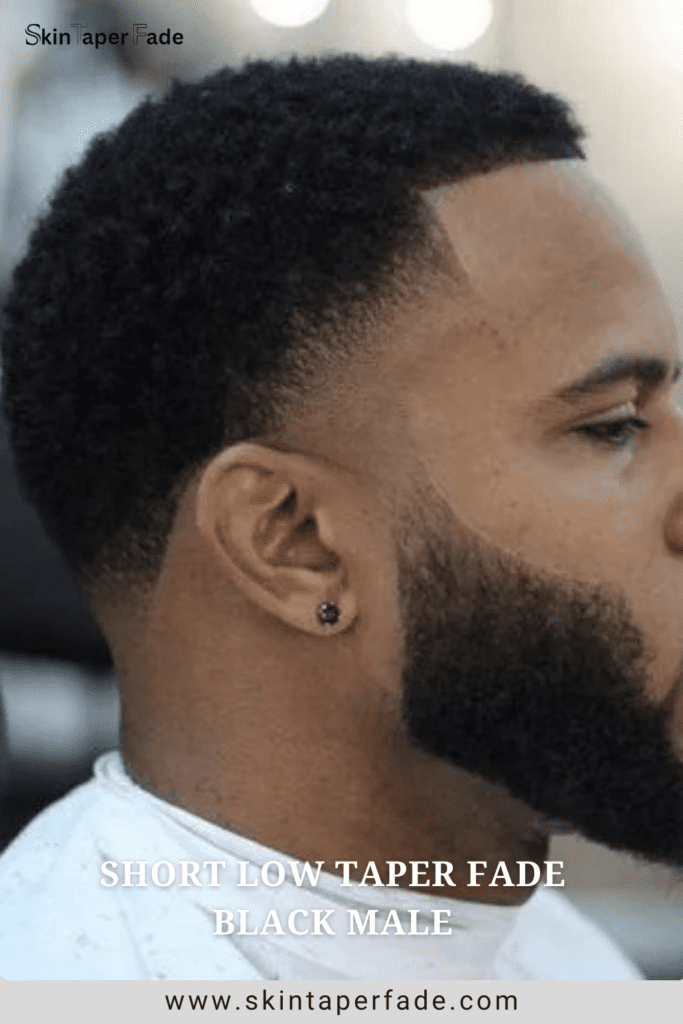
A short low taper fade is ideal for Black men who want a sharp, defined look with minimal maintenance. This cut is clean and professional, making it a popular choice for daily wear.
Low Taper Fade Short Curly Hair
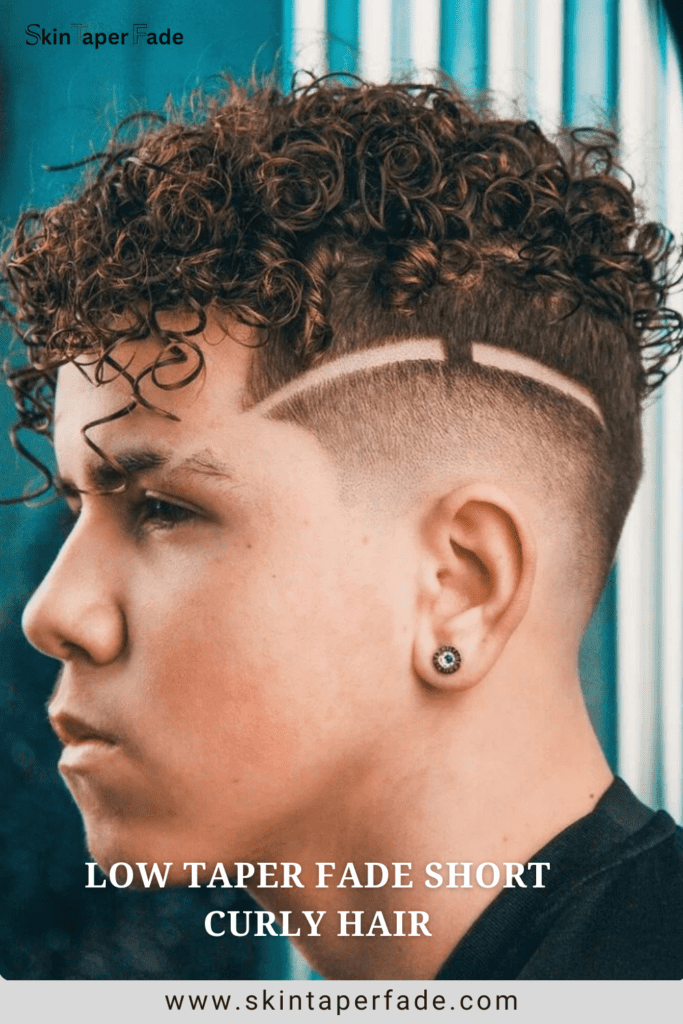
The low taper fade with short curly hair adds definition to the curls and reduces bulk on the sides. This style works well for men who want to highlight their natural texture without excessive upkeep.
Styling Options: Taper Fade with Fringe, Beard, and Textured Looks
Short Textured Fringe with Low Taper Fade
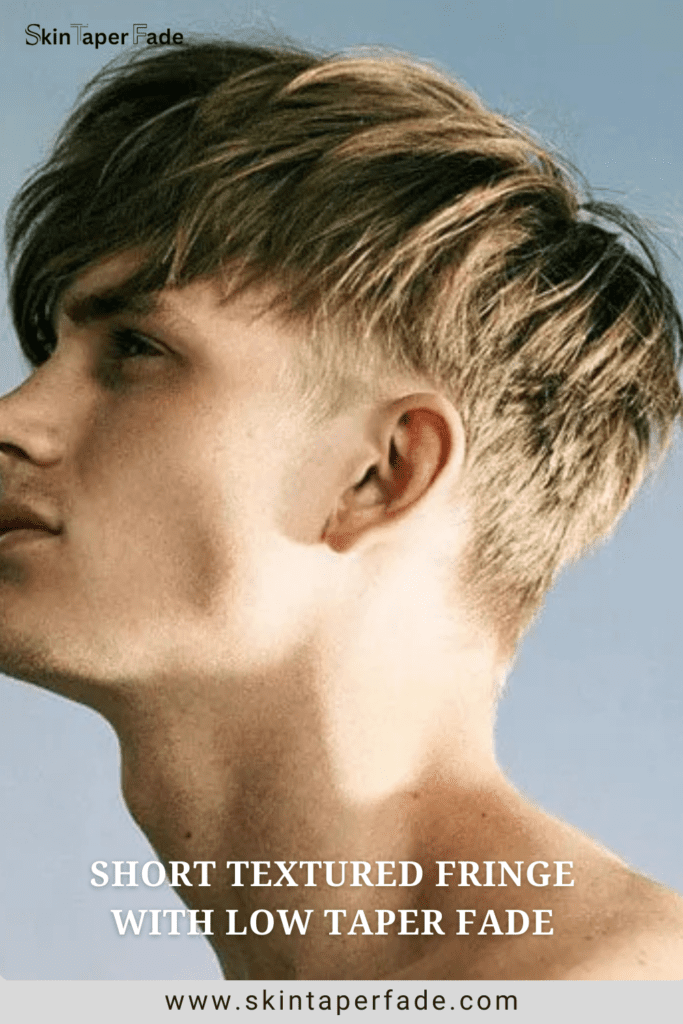
This cut features a fringe on top with a textured look, complemented by a low taper fade. It’s perfect for a modern, trendy appearance and works particularly well for those with straight or wavy hair.
Low Taper Fade with Beard Black Male
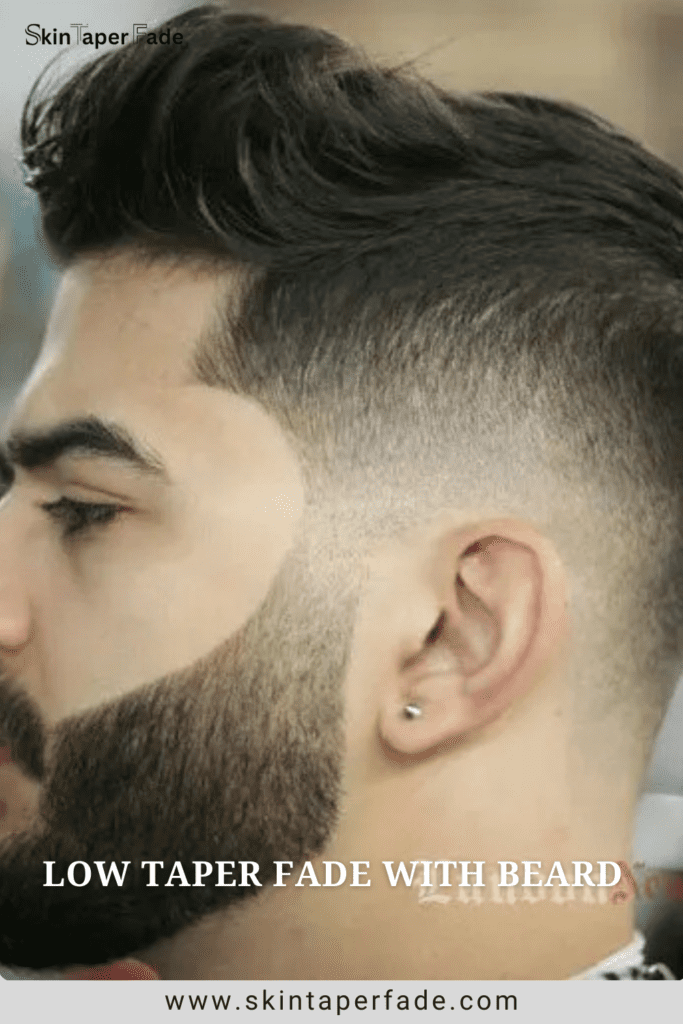
Pairing a low taper fade with a beard creates a cohesive look, as the fade blends seamlessly into the beard. This style offers a masculine, defined appearance that’s versatile and easy to maintain.
Creative Variations of Low Taper Fade with Unique Styles
Low Taper Fade Slick Back
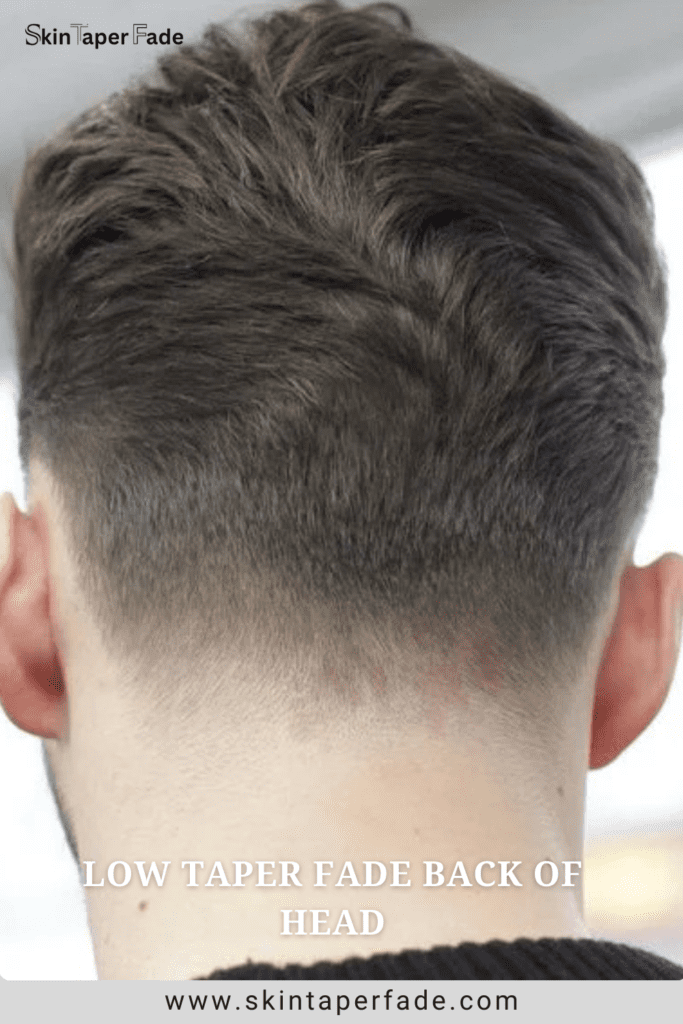
The slick-back low taper fade is a sleek, stylish look that’s ideal for both professional and casual settings. Use a high-quality pomade to slick the top back, creating a polished finish.
Low Taper Fade with Design in the Back
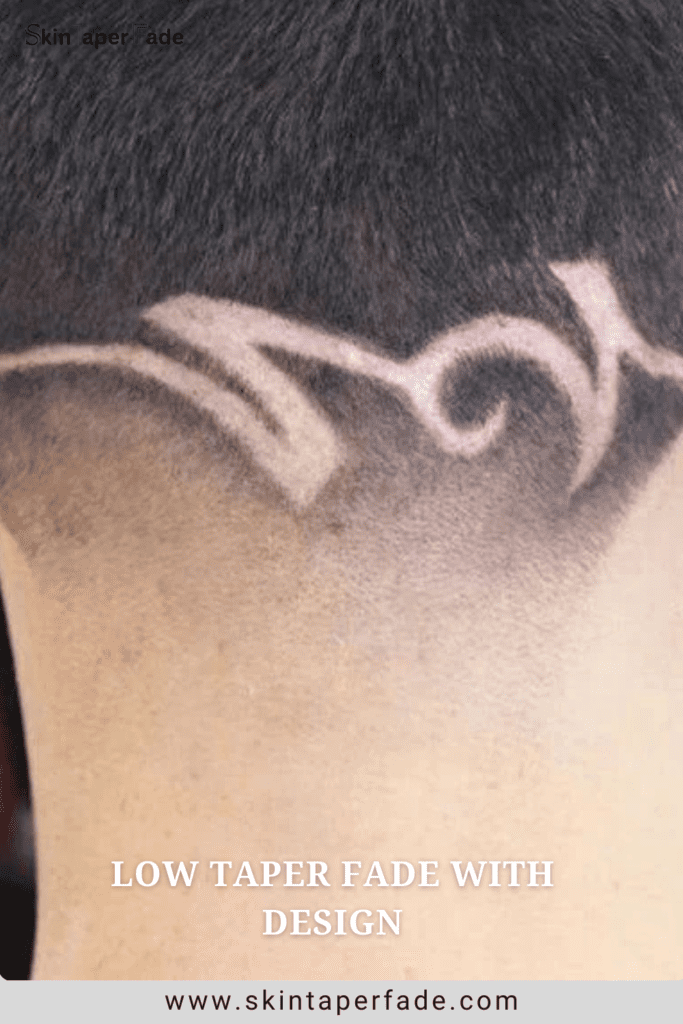
For a unique touch, some men opt for a design shaved into the fade at the back. This could be anything from lines to geometric patterns, adding a personalized flair to the low taper fade.
Cultural and Trend-Based Styles
Hispanic Low Taper Fade Curly Hair
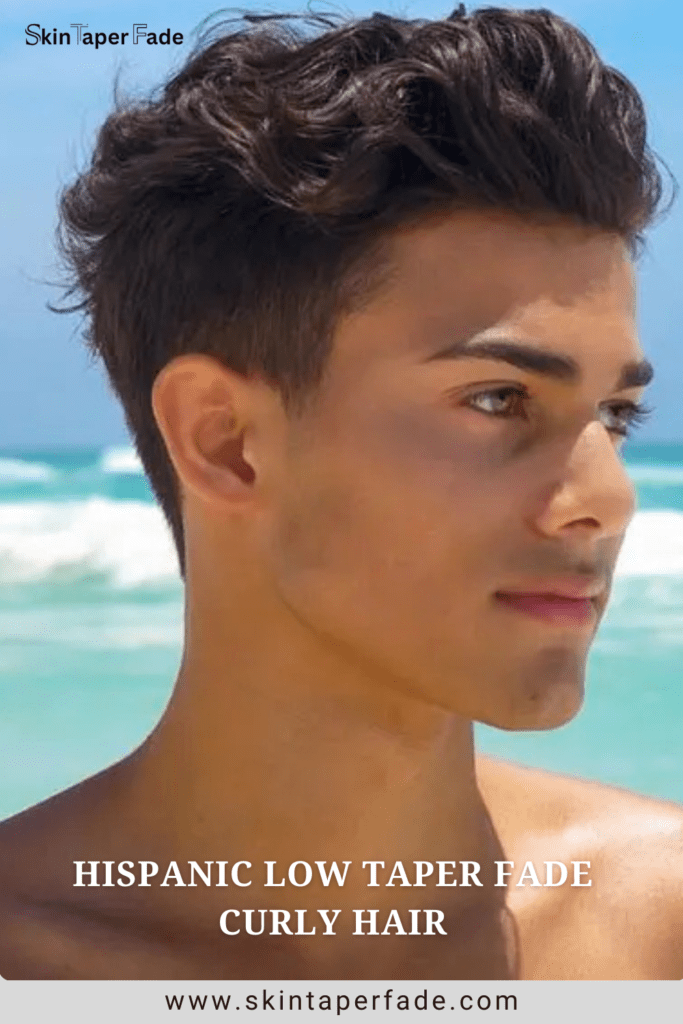
This style embraces natural curls with a low taper fade, which frames the face and enhances texture. It’s a popular look among Hispanic men who want a low-maintenance yet stylish haircut.
Mexican Low Taper Fade
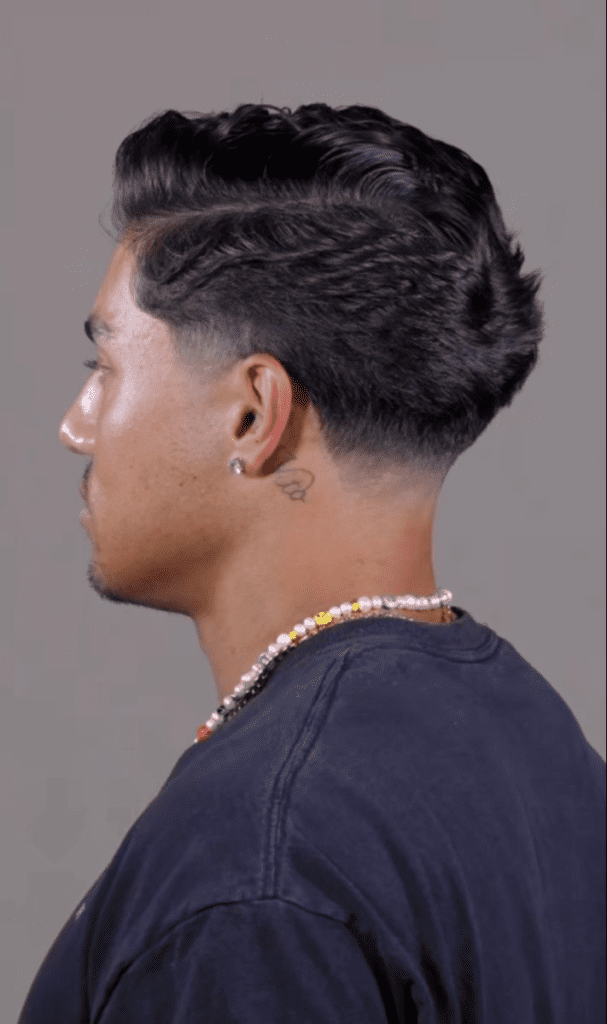
The Mexican low taper fade often features a high-contrast fade with a textured top, adding character to the cut. This look is ideal for men who want a sharp, defined appearance.
Unique Low Taper Fade Variations for Personal Style
Low Taper Fade Mullet
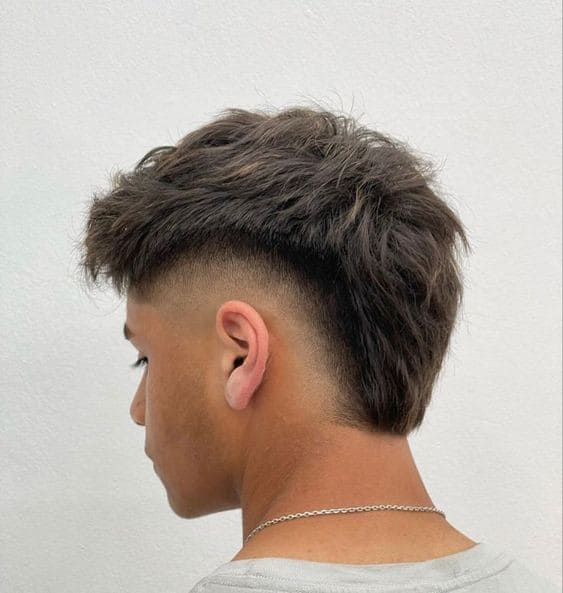
The low taper fade mullet combines two popular styles, offering a look that’s bold and unique. This style keeps the top and back long while fading the sides, creating an eye-catching contrast.
Low Taper Fade Dreads
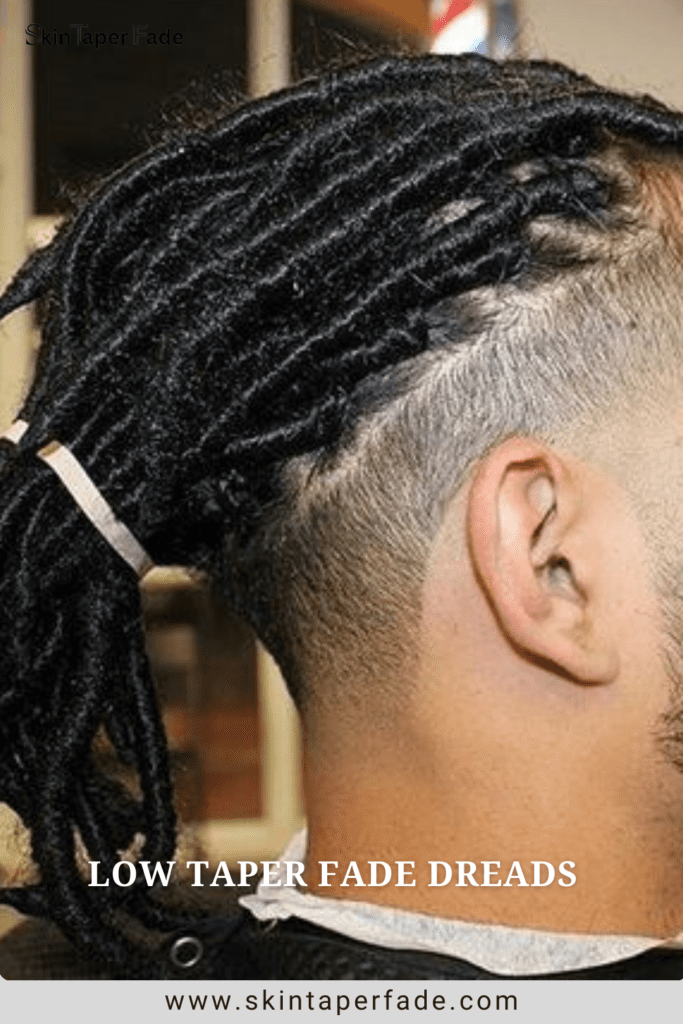
For men with dreads, the low taper fade keeps the sides clean and emphasizes the dreadlocks on top. This style is both functional and fashionable, as it reduces maintenance on the sides while showcasing the dreads.
Cultural Perspectives and Style Evolution
The Low Taper Fade in Different Communities
My research reveals fascinating cultural variations in how different communities approach the low taper fade.
In Black Barbershops:
The low taper fade occupies a special place in Black barbering tradition, representing the evolution of cuts like the temple fade and South of France. The precision required aligns with the cultural emphasis on sharp, meticulous grooming.
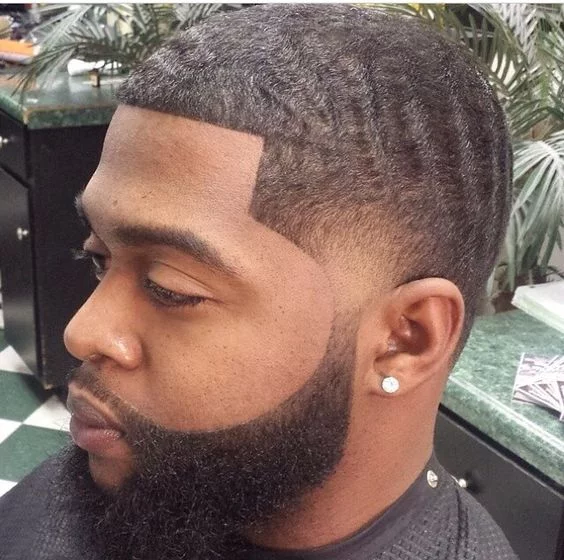
Master barber James Washington reflects: “In our community, your fade is a statement. The low taper shows you care about your appearance without being flashy. It’s confident and understated at the same time.”
Maintenance frequency tends to be higher, with many men visiting their barber weekly or bi-weekly. This regularity reflects the cultural value placed on consistently fresh appearance and the social aspect of barbershop culture.
In Latino Communities:
The low taper fade often features higher contrast between the faded sections and the top, with more dramatic transitions creating a bold aesthetic. Texture and slight length on top allow for slicking back or forward, providing styling versatility.
Barber Miguel Santos explains: “My Latino clients often want the fade to be noticed. We might use a lower guard at the bottom or take it to skin to create that sharp contrast. It’s about presence.”
In Asian Communities:
With typically straight, thick hair, Asian men often pair low taper fades with textured crops or perms to add movement. The fade helps manage the bulk that straight, dense hair can create at the sides.
Korean-American barber Jin Park shares: “The rise of K-pop and Korean men’s fashion has influenced what my Asian clients request. They want the low taper clean but not too short, paired with styled, texturized tops that have movement.”
Expert Maintenance Protocols
Maintaining a low taper fade requires understanding both the technical aspects and the practical realities of hair growth.
Timeline and Touch-Up Strategy
Weeks 1-2: Your fade looks optimal. The transitions are crisp, and the overall shape is exactly as intended.
Weeks 3-4: Hair growth begins to soften the fade. For most men, this remains acceptable, though meticulous individuals may prefer a touch-up by week 3.
Week 5+: The fade loses its defined transition. For professional settings where appearance matters, this is when a cut becomes necessary rather than optional.
Barber and shop owner Luis Hernandez advises: “I tell clients to book their next appointment before they leave. Hair grows at predictable rates—usually about half an inch per month. If you wait until you think you need a cut, you’re usually a week past optimal.”
Between-Visit Maintenance
Daily Maintenance:
- Brush or comb the hair on top to prevent tangles and distribute natural oils
- For curly hair, refresh curls with a water-based spray and light product
- Check the neckline for stray hairs that may need trimming
Weekly Care:
- Shampoo 2-3 times per week (daily washing strips natural oils)
- Condition each time you shampoo, focusing on the hair at the top rather than the faded areas
- Apply a scalp treatment or oil once per week to maintain scalp health
Product Selection:
Your styling products should match both your hair type and desired finish:
For matte, natural looks: clay, paste, or fiber-based products For shine and hold: pomade or gel-based products For texture without much hold: sea salt spray or texture powder For curly hair: leave-in conditioner, curl cream, or curl-defining gel
Celebrity barber Marcus Jones emphasizes: “Product quality matters more than quantity. A dime-sized amount of premium product outperforms a handful of drugstore alternatives. Invest in your hair like you invest in your wardrobe.”
Home Maintenance Tools
While professional cuts are essential, certain tools help extend your fade’s lifespan:
Handheld Mirror: Allows you to check the back and sides between visits, catching issues early.
Quality Trimmer: For neckline cleanup only. Never attempt to trim your fade yourself—the risk of creating steps or uneven areas is too high.
Proper Comb: A fine-tooth comb for styling, a wide-tooth comb for detangling curly hair.
Choosing Your Barber: What to Look For
The low taper fade’s quality depends entirely on your barber’s skill. Here’s how to identify true expertise:
Technical Indicators of Skill
Consultation Process: Excellent barbers begin with questions about your lifestyle, styling routine, and desired maintenance level. They assess your hair’s growth patterns, texture, and your face shape before making recommendations.
Tool Proficiency: Watch how your barber uses their clippers. Smooth, confident movements with consistent pressure indicate experience. Multiple passes over the same area usually signal uncertainty.
Blend Inspection: After the cut, ask your barber to show you the fade using mirrors from multiple angles. The transition should be seamless—no visible lines between guard lengths.
Master educator Barbara Stevens teaches: “A proper low taper fade should look like a gradient, not stairs. Each section should melt into the next. If you can point to where one length ends and another begins, the fade needs more work.”
Red Flags
- Rushing through the cut without consultation
- Inconsistent guard lengths on corresponding sides
- Visible clipper marks or irritation on the skin
- Unwillingness to make adjustments if you’re not satisfied
- Lack of finish work around the hairline and neckline
Personal Experiences: Real Men, Real Results
Throughout this research, I interviewed dozens of men about their low taper fade experiences. Their insights reveal the practical reality of living with this style.
Jake, 34, Marketing Director
“I switched to a low taper fade three years ago after trying various styles. What sold me was the versatility—I can look professional in client meetings, but I don’t feel like I’m wearing a costume on weekends. My barber taught me how to style it in five minutes flat, which fits my rushed mornings. The only challenge is committing to that 3-week appointment rhythm, but I’ve learned to treat it like any other maintenance routine.”
Darius, 27, Teacher
“As a Black man with tight curls, I struggled with finding a style that looked good grown out and fresh. The low taper solved that. Even when I push it to five weeks between cuts, it still looks intentional. I keep moisture in my curls on top, and the fade just provides that clean frame. My barber has been cutting my hair since high school, and that relationship matters—he knows exactly what I want before I sit down.”
Chen, 41, Software Engineer
“I have very straight, thick Asian hair that gets bulky at the sides. The low taper fade changed everything for me. Combined with texturizing on top, I finally have a style with dimension. I was skeptical about regular barber visits since I’d always just gone when my hair felt too long, but keeping up with it actually simplifies things. I know exactly when I need to go, and it always looks good.”
The Psychology of Grooming: Why This Matters
Beyond aesthetics, regular grooming routines impact mental wellbeing in measurable ways.
Psychologist Dr. Alan Foster, who studies male self-care behaviors, explains: “Maintaining appearance through practices like regular haircuts provides a sense of control and self-investment. Men who maintain consistent grooming routines report higher confidence levels and better self-image. It’s not vanity—it’s self-respect made visible.”
The low taper fade particularly benefits from this psychological effect because it requires consistency. Unlike longer styles where cuts are occasional, this style builds a rhythm of self-care into your routine.
Several men I interviewed mentioned that their regular barber appointments became valued “me time”—20-30 minutes to disconnect, relax, and focus solely on themselves in otherwise hectic schedules.
Cost Analysis: Investment and Value
Understanding the true cost of maintaining a low taper fade helps set realistic expectations.
Per-Visit Costs:
- Basic barbershops: $20-$35
- Mid-range salons: $35-$60
- High-end establishments: $60-$100+
Annual Investment: Assuming visits every 3.5 weeks (approximately 15 visits per year):
- Budget option: $300-$525 annually
- Mid-range: $525-$900 annually
- Premium: $900-$1,500+ annually
Product Costs: Quality styling products last 2-4 months with daily use:
- Annual product investment: $80-$200
Total Annual Investment: $380-$1,700
This represents excellent value when compared to women’s haircare (average $1,500-$3,000 annually) and provides consistent, professional appearance benefits that impact career and social opportunities.
Barber and business consultant Michael Torres notes: “Men often underestimate how much regular grooming improves first impressions. Studies show well-groomed men are perceived as more competent, trustworthy, and successful. If your cut costs $40 and you see clients, interview for jobs, or date, that’s a phenomenal return on investment.”
Future Trends and Style Evolution
Based on conversations with forward-thinking barbers and fashion observers, several trends are emerging:
Sustainability Focus: More men are asking about products with clean ingredients and sustainable packaging. This consciousness extends to choosing barbers who use energy-efficient tools and minimize waste.
Customization Technology: Some high-end shops now use scalp-scanning technology to create precise fade maps tailored to individual head shapes and hair growth patterns. While expensive, this technology may become more accessible.
Hybrid Styles: The boundaries between distinct cuts continue to blur. Expect to see more low taper fades combined with unconventional top styles as men become bolder in their aesthetic choices.
Fashion forecaster Linda Chen predicts: “We’re moving toward radical individual expression balanced with technical precision. The low taper fade provides that precision foundation that allows for creativity on top. It’s become the base onto which men build their personal style rather than being the entire statement.”
Making Your Decision: A Systematic Approach
If you’re considering a low taper fade, use this framework to ensure the best outcome:
Step 1: Assess Your Commitment Level
Be honest about maintenance. If visiting a barber every 3-4 weeks feels unrealistic given your schedule or budget, consider a slightly longer style that requires less frequent attention.
Step 2: Research Your Barber
Don’t choose based solely on price or proximity. Look at portfolios, read reviews, and ideally, visit the shop to observe the work. The difference between an adequate fade and an excellent one is significant.
Step 3: Communicate Clearly
Bring reference photos but also explain your lifestyle, styling ability, and what you like or dislike about previous cuts. Good barbers appreciate this context.
Step 4: Start Conservative
If you’re new to fades, begin with a longer, more gradual version. You can always go shorter or more dramatic, but you can’t undo an overly aggressive fade.
Step 5: Commit to the Process
Give your new style at least three cuts before judging it. Hair needs time to adjust to new growth patterns, and you need time to learn styling techniques.
Common Mistakes to Avoid
Through observation and interviews, several mistakes repeatedly emerge:
Waiting Too Long Between Cuts: By week 5 or 6, your fade essentially requires rebuilding rather than maintaining. This costs more time and often more money.
Using the Wrong Products: Heavy waxes on fine hair, drying gels on curly hair, or no product on thick hair—mismatched products prevent your cut from looking its best.
DIY Fade Attempts: Even professional barbers don’t cut their own fades. The angles required make it virtually impossible to achieve even results on yourself.
Ignoring Scalp Health: A great fade on an unhealthy scalp looks subpar. Address dandruff, dryness, or irritation with appropriate treatments.
Choosing Style Over Sustainability: Requesting a style that doesn’t suit your hair type or face shape because it looks good on someone else rarely produces satisfying results.
The Social Aspect: Barbershops as Community Spaces
One unexpected finding from my research was how many men value their barbershop as a social hub. This matters more than it might initially seem.
Professor of Sociology Dr. Richard Martinez studies male social spaces: “Barbershops serve a unique function in men’s lives—they’re one of the few remaining spaces where men gather regularly, converse openly, and build community. The low taper fade’s maintenance schedule ensures consistent participation in this social ecosystem.”
Many men described their barber relationship as therapeutic—someone who listens without judgment, provides honest feedback, and maintains continuity across years or even decades of life changes.
This social value adds another dimension to the “worth” calculation of regular cuts. You’re not just paying for a haircut; you’re investing in consistent social connection and community participation.
Conclusion: The Low Taper Fade as a Foundation for Personal Style
After extensive research, interviews, and analysis, a clear conclusion emerges: the low taper fade succeeds not despite its simplicity but because of it. This haircut provides a reliable foundation that adapts to virtually any hair type, face shape, or personal aesthetic while maintaining professional polish.
The key insights worth remembering:
- The low taper fade works universally because it enhances natural head shape rather than fighting against it
- Success requires partnership with a skilled barber who understands your specific hair and lifestyle
- Maintenance consistency matters more than any other factor in keeping this style looking excellent
- The style serves as a foundation for personal expression rather than being the entire statement
- Cultural variations enrich the basic technique, offering diverse interpretation possibilities
Whether you’re considering your first low taper fade or looking to refine your existing style, approach it as an ongoing practice rather than a one-time decision. Your hair, like everything else about you, evolves. The low taper fade offers enough structure to always look intentional while remaining flexible enough to grow with your changing preferences.
Ultimately, this haircut’s enduring popularity stems from a simple truth: it makes men look like polished, put-together versions of themselves without requiring them to adopt a persona that doesn’t fit. In a world of increasing complexity, that straightforward authenticity holds genuine appeal.
FAQs
How often should I get a low taper fade haircut?
For optimal appearance, most men should visit their barber every 3-4 weeks. This timeline maintains the crisp transition and clean lines characteristic of a well-executed fade. If you prefer a sharper look or have faster hair growth, every 2-3 weeks may be necessary. For more relaxed maintenance, you can extend to 5 weeks, though the fade will have softened considerably by then.
What’s the difference between a low taper fade and a low fade?
The terms are often used interchangeably, but technically, a taper gradually decreases length with scissors or longer clipper guards, while a fade goes down to skin or very short lengths. In practice, most “low taper fades” incorporate both techniques—tapering in the upper sections and fading to shorter lengths near the bottom. The “low” designation simply indicates the fade begins lower on the head, just above the ears.
How much does a low taper fade cost?
Costs vary significantly by location and barbershop quality. Expect to pay $20-$35 at basic barbershops, $35-$60 at mid-range establishments, and $60-$100+ at high-end salons in major cities. Many barbers offer package deals or membership pricing that reduces per-visit costs. Remember that a skilled barber producing excellent results is worth the investment—a poor fade at $20 is no bargain.
Can I get a low taper fade with curly hair?
Absolutely. The low taper fade works exceptionally well with curly hair, from loose waves to tight coils. The fade provides structure and definition while allowing your natural texture to shine on top. The key is finding a barber experienced with curly hair who cuts it dry or damp to account for curl shrinkage. Many men with curly hair find the low taper fade reduces styling time while maintaining a polished appearance.
How do I maintain a low taper fade at home?
Between professional cuts, maintain your fade by keeping the hair on top properly styled and moisturized. Use appropriate products for your hair type—leave-in conditioner for curly hair, matte clay for straight hair needing texture. You can carefully trim stray hairs at the neckline with a small trimmer, but never attempt to touch up the fade itself. Regular brushing or combing, shampooing 2-3 times weekly, and conditioning maintain hair health and appearance.
What face shape works best with a low taper fade?
The low taper fade is remarkably versatile and works with all face shapes, though slight adjustments optimize results. Oval faces suit virtually any variation. Round faces benefit from added height on top to create elongation. Square faces look excellent with low tapers as the fade complements strong jawlines. Long faces should keep volume moderate on top to avoid further lengthening the appearance. Consult with your barber about specific adjustments for your face shape.
What’s the difference between low, mid, and high taper fades?
The distinction lies in where the fade begins. A low taper fade starts just above the ears, creating a conservative, subtle look. A mid fade begins approximately at the temple level, offering more contrast and visibility. A high fade starts near the top of the head, creating dramatic contrast and a bold appearance. Low fades suit professional environments and provide the most styling versatility on top.
Can older men wear low taper fades?
Definitely. The low taper fade suits men of all ages and often looks particularly sophisticated on mature men. The clean, structured appearance conveys polish and attention to detail. Many men find that as their hair thins or grays, a low taper fade provides definition that makes hair appear fuller and more intentional. The style’s classic nature means it never looks like you’re trying too hard or dressing inappropriately for your age.
What products should I use to style a low taper fade?
Product choice depends on your hair type and desired finish. For matte, textured looks, use clay, paste, or fiber products. For shine and strong hold, choose pomade or gel. For natural enhancement with minimal hold, try sea salt spray or texture powder. Curly hair benefits from leave-in conditioner and curl-defining cream. Apply product to damp hair for easier distribution and stronger hold, or to dry hair for a more natural, flexible result.
How long does my hair need to be on top for a low taper fade?
You can get a low taper fade with virtually any length on top—from a short buzz (half-inch) to long flowing styles (6+ inches). The minimum practical length is about 1/4 inch on top to create visible contrast with the faded sides. However, most popular styles feature 1-4 inches on top, providing enough length for versatile styling while remaining manageable. Discuss your lifestyle, styling ability, and preferences with your barber to determine the ideal top length for you.
Discover More Haircut Inspiration
Looking for fresh haircut ideas? Explore our related articles for expert tips and trendy styles, perfect for every hair type and individual personality!