
Faded undercut hairstyles have become a defining trend for men and women seeking a sharp, edgy look that merges classic barbering with modern flair. This hairstyle blends two powerful elements — a fade and an undercut — to create a versatile style that suits almost every face shape, hair texture, and personal vibe. Whether you’re after a low-maintenance look or something bold and fashion-forward, the faded undercut is a game-changer.
Let’s explore what makes the faded undercut such a standout haircut, how it differs from traditional styles, and how you can make it your own in 2025 and beyond.
Contents
- What is a Faded Undercut?
- Variations of the Faded Undercut
- Best Hair Types for the Faded Undercut
- Faded Undercuts with Beards
- How to Style a Faded Undercut
- Maintenance Tips
- Why Gen Z & Millennials Love the Faded Undercut
- Cultural Influence & Global Appeal
- Final Thoughts: Should You Try the Faded Undercut?
- 5 Most Asked FAQs About Faded Undercuts
What is a Faded Undercut?
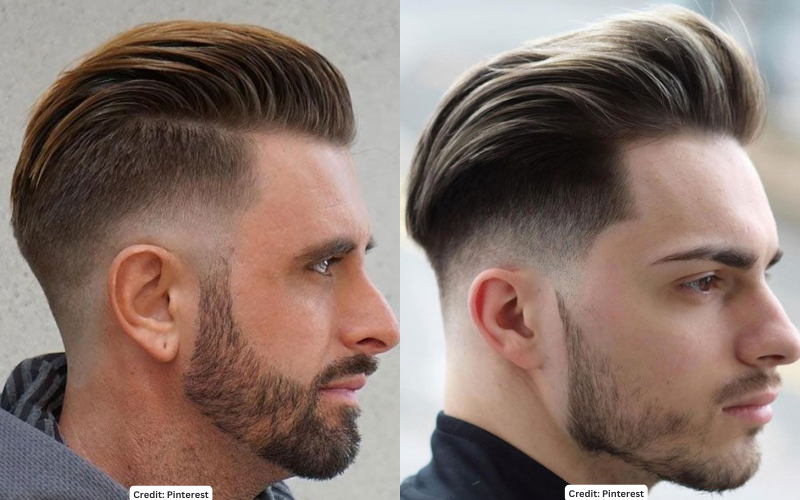
At its core, a faded undercut combines the high-contrast effect of an undercut with the seamless transition of a fade. The sides and back of the head are trimmed short and gradually blended into the longer hair on top, leaving a striking difference in length between the upper and lower sections of the hair.
Unlike a regular fade, which blends the hair from skin or short lengths upwards, or a traditional undercut, which has a sharp disconnect between top and sides, the faded undercut softens that contrast — creating a polished, adaptable look.
Variations of the Faded Undercut
1. Low Faded Undercut
This version starts the fade just above the ear and keeps it subtle. It’s ideal for professionals and those who want a cleaner, softer edge.
2. Mid Faded Undercut
The fade begins mid-way up the sides, creating a balanced appearance that works well with both short and medium-length top hair.
3. High Faded Undercut
A bold and edgy option, the high faded undercut removes most of the side hair, letting the top take centre stage. Perfect for textured or curly tops.
4. Skin Faded Undercut
Also called a bald fade undercut, this style goes right down to the skin, offering a high-contrast, ultra-clean finish. This is the sharpest and most high-maintenance option.
5. Taper Faded Undercut
A more conservative version where the fade is subtle and slow, tapering the hair at the neckline and sideburns. Ideal for blending into beard lines or keeping a classic look.
Best Hair Types for the Faded Undercut
The beauty of a faded undercut is that it works with nearly all hair types. However, certain styles lend themselves better to specific textures:
- Straight Hair: Easy to style with pomade or wax, perfect for slick-backs or pompadours.
- Wavy Hair: Adds natural volume; works well with a messy top or a textured fringe.
- Curly Hair: High fade undercuts give a modern edge while showcasing natural curls.
- Thick Hair: Undercuts help remove weight while the fade adds structure.
Faded Undercuts with Beards
Pairing a faded undercut with a beard creates a masculine, structured look that adds definition to the jawline. You can also taper the fade into the beard for a seamless transition — a popular style in modern barbershops.
How to Style a Faded Undercut
Styling depends on the top length and your desired finish:
- For sleek styles: Use a pomade or gel and comb hair back or to the side.
- For volume: Blow-dry with a round brush, use volumising mousse or clay.
- For messy styles: Use sea salt spray or matte wax, and work the hair with your fingers.
- For curly tops: Apply curl-enhancing cream and air dry for definition.
Pro Tip: Always dry your hair in the direction you want it to fall — this sets the foundation for a lasting style.
Maintenance Tips
- Trim frequency: Every 2–3 weeks for fade upkeep
- Daily styling: Depends on top length, but most styles benefit from light product
- Fade line: Keep it clean — a quick visit to the barber helps keep it looking sharp
- Wash with care: Avoid overwashing; opt for sulfate-free shampoos to prevent dryness
Why Gen Z & Millennials Love the Faded Undercut
The faded undercut reflects individuality and flexibility. You can shape it around your personal taste — edgy or clean, short or long, textured or neat. Social media influencers and style icons like Zayn Malik, Timothée Chalamet, and K-pop idols have also helped boost its popularity among younger generations.
Cultural Influence & Global Appeal
Though its roots lie in early 20th-century military and punk aesthetics, the modern faded undercut has transcended borders — now embraced across Asia, Europe, the UK, and North America. It’s especially trendy in barbershop culture, seen in both professional and urban fashion scenes.
Final Thoughts: Should You Try the Faded Undercut?
Absolutely — if you’re seeking a haircut that offers sharpness, adaptability, and style longevity, the faded undercut is a top-tier choice. It’s easy to personalise and complements almost every head shape and hair type.
Whether you’re going for a clean corporate vibe, an artsy edge, or something in between, the faded undercut can deliver — all it takes is the right fade, the right length on top, and a bit of product.
5 Most Asked FAQs About Faded Undercuts
1. What is a faded undercut?
A faded undercut is a hairstyle that blends a fade on the sides and back into a longer top, combining elements of both a fade and an undercut.
2. How is a faded undercut different from a regular undercut?
Unlike a traditional undercut which has a sharp disconnect between top and sides, a faded undercut uses a gradual blend, offering a smoother transition and cleaner finish.
3. Is the faded undercut suitable for all face shapes?
Yes, it’s highly adaptable. Your barber can adjust the fade height and top length to complement round, oval, square, or long faces.
4. How often should I get a faded undercut trimmed?
To keep the fade fresh and the cut looking sharp, visit your barber every 2–3 weeks. Longer top sections may need trimming less frequently.
5. Can women wear a faded undercut?
Absolutely. Faded undercuts are popular in unisex and gender-neutral styles — especially in fashion-forward and alternative haircut trends.